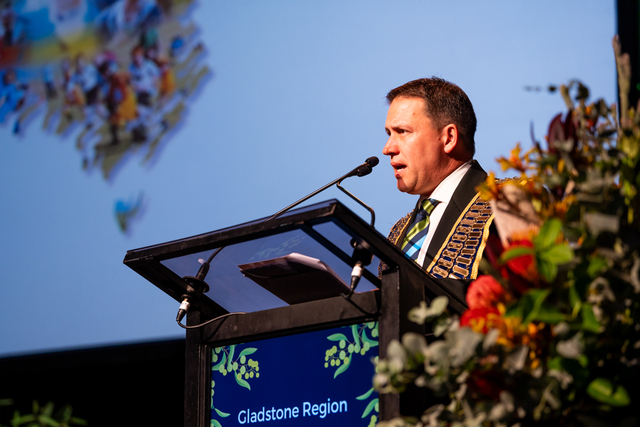
The Commonwealth Grants Commission recently conducted a two-day Conference to discuss the draft report into the review of the Local Government (Financial Assistance) Act 1995 with key stakeholders including Stateand Territory Governments, Local Government Grants Commissions and Local Government Associations attending.
A number of councils were also present at the Conference, which was held in Canberra on 29 and 30 March.
The Commonwealth Department of Transport and Regional Services also facilitated meetings between State and Territory Local Government Grants Commissions and the Commonwealth Grants Commission to discuss technical aspects of the Commission’s draft report.
As part of the Review, the Commonwealth Grants Commission looked at trends in Commonwealth and State financial assistance to Local Government and changes in Local Government expenditure patterns. The Commission made some interesting observations in the draft report released in January.
While State assistance to Local Government has increased in real terms, it has declined in relative importance since 1974-75. In contrast the Commission found that the relative importance of Commonwealth assistance to Local Government has increased.
The Commission’s draft report shows that in 1974-75 transfers from the States to Local Government accounted for 14.8 per cent of Local Government revenue. By 1997-98 this proportion has declined to 7.1 per cent.
In contrast, Commonwealth transfers to Local Government over the same period as a proportion of total revenue have increased from 10.5 per cent to 12.1 per cent. The Commission found a broadly similar outcome for State assistance for all States except Tasmania. The importance of State assistance in Tasmania is now greater than in 1974-75.
The report also indicates that Local Government’s own source revenues have increased slightly as a proportion of total revenue, with municipal rates declining in importance while user charges have increased in importance. User charges are now Local Government’s growth revenue, although municipal rates still remain the primary source of revenue.
The Commission has also made some interesting observations in regard to the pattern of Local Government expenditure. Despite the doubling of expenditure in real terms on roads over the last 37 years, expenditure on people services, education, health, welfare, public safety and recreation and culture, has grown tenfold.
What these findings suggested to the Commission was that Local Government is funding these expanding areas of people services by spending proportionally less on its traditional areas of services provision including roads.
The Commission found that although roads remain Local Government’s largest expenditure function its level of importance has declined from about half of expenditure in 1961-62 to a little more than a quarter of all expenditure in 1997-98.This steady decline in the relative importance of roads in Local Government expenditure is an important finding by the Commission.
There was a largely positive response to the draft report at the March Conference and general support for the Commission’s draft recommendations and findings.
The Commission undertook to take on board a number of issues raised by Conference participants and to consider reflecting these in the final report. Participants at the Conference congratulated the Commission for the way it has conducted the review and its openness in dealing with interested parties.
The Commission is expected to provide its final report to Government at the end of June 2001. The final report will be available on the Commission’s website at www.cgc.gov.au.