Queensland’s Boonah Shire Council has 536 kilometres of dirt roads that are used by school buses, agricultural machinery, cars and trucks. The Shire is hilly, with gradients up to 16.6 per cent and a diverse range of soil and geological formations. These factors have combined to make unsealed road maintenance a significant drain on Council’s Road Infrastructure Budget in the past. But all that has changed since Council applied a new approach to its gravel extraction and non renewable resource crushing methods.
The following is an edited extract from a paper presented by Director Works and Technical Services, Patrick Murphy, to a Leading Practice Seminar on 9 May.
The traditional approach
Traditionally, unsealed road construction and maintenance was a creeping improvement syndrome from bush tracks of poor alignment — originally meant for horse and sulkies — to a gravel standard used by modern cars as well as 42.5 tonne trucks. Many of our roads have never been constructed to meet appropriate current day standards. The delivery of the maintenance service was generally driven by a reactive need (based on complaints) rather than a planned, efficient process. Because there was no planned approach, the annual budget was based on a single historical amount plus a growth allowance. The pavement material would unravel in dry conditions and be too slippery in the wet. The higher loss of binder from traffic was accepted as standard practice. This premature failure of the pavement resulted in more frequent grading, which loosened the pavement surface, promoting the early deterioration. The demand on gravel was a major concern because of finite gravel resources and the difficulty in establishing new quarries.
The improvement process
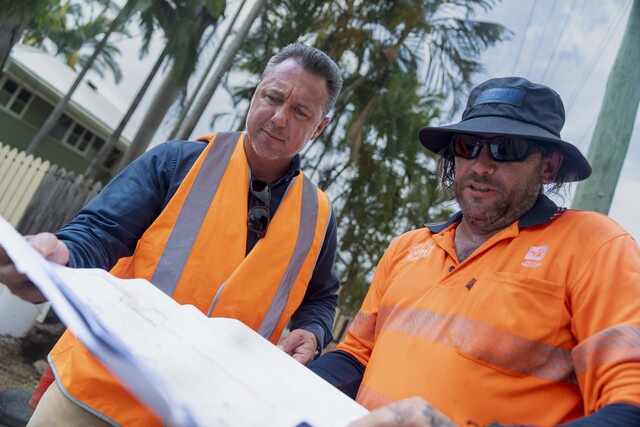
The first and most important phase was to engage the people who actually did the work. The knowledge of staff should not be underestimated. They are the people doing the work, so they should know the real issues. Council staff were lucky to be involved with the Australian Road Research Board’s Unsealed Road Guidelines. I was invited to be a member of the technical review committee for these guidelines and Council’s key maintenance staff were trained by ARRB to use the Guidelines. The staff prepared and documented the Maintenance Management Strategy, thereby having significant ownership of the outcomes. Activity based budgeting, an inspection process and work orders were introduced. The focus of the day labour workforce changed to outcomes rather than inputs. A number of crushing contractors were used to refine Council’s gravel processing to meet ARRB specifications. The key to keeping material on the road longer is having the correct proportions of amour (rock) to binder (clay).
Positive outcomes
Improved pavement shape and material compaction have resulted in improved safety on unsealed roads, which has cut travel times and, therefore, costs. Higher quality maintenance activities are delivered for the same dollars and the annual budget is determined by road maintenance needs.
The future
We have a new operational manager who will be reviewing procedures for ongoing improvements. Investigations are being undertaken for a computer system to allow for integrated management support. At present, we have a number of home grown Access and Excel spreadsheets for monitoring and reporting. There have been innovations that are being trialed. The most notable one is the conversion of the Flocon road patrol truck to a verge spray unit, which will manage vegetation on the less busy unsealed roads.
For further information contact Patrick Murphy, email megang@boonah.qld.gov.au or telephone (07) 5463 3020.