Home » Climate change affects Australia’s environment

Climate change affects Australia’s environment

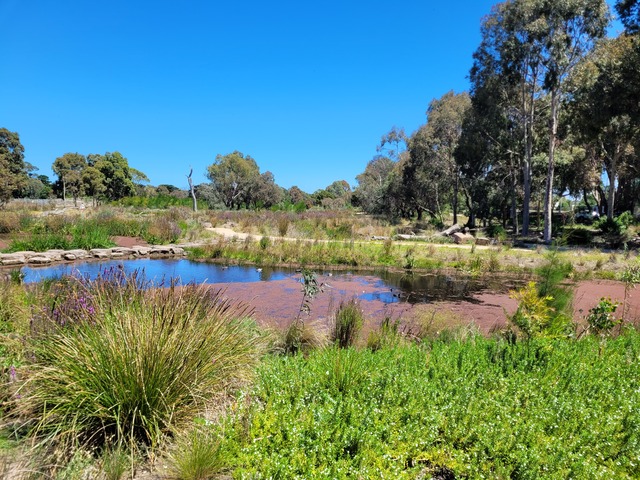
Australia’s unique environment is under pressure. Threats such as land clearing, salinity and invasive species are making our natural assets vulnerable. Climate change exacerbates existing threats such as increasing frequency of fires, and contributes to more persistent droughts. The gradual rise in temperatures may eventually go beyond the tolerances of some species.

There is still much uncertainty about how individual species and the landscape will respond to future climate change. It is vital that we have the right information to ensure Australia makes sound decisions in this area.

Australia is one of the first countries in the world to develop a comprehensive plan to address the potential impacts of climate change on our environment. The National Biodiversity and Climate Change Action Plan, developed by the Australian Governments’ Natural Resource Management Ministerial Council, was finalised in September 2004. The Plan is the first step in the long term challenge to assist our native plants and animals to adapt to future climate change. The Plan includes steps to improve our understanding of the impacts of climate change on our natural resources, and will help us identify and protect vulnerable species living on the land and in freshwater and marine environments. It promotes actions such as revegetation around forest patches to make plant life more resilient to rising temperatures.

The Plan includes activities aimed at preventing the establishment of invasive species, and reducing the chance of existing weeds, feral animals and plant and animal diseases from spreading further in future climates. Putting the Plan into practice may require a change in the way we manage our natural resources. We need to use the best available science to determine which actions will work and how best to apply them. We also need to weigh up the economic costs and benefits of taking certain actions.

The Plan provides valuable information including steps to undertake case studies across a range of natural environments. Most of all, the community needs to have access to the most accurate information on this important issue.

The Plan includes actions to integrate information about climate change impacts on biodiversity into existing educational material and school programmes, so that future generations of Australians can take up the fight to protect our precious natural resources.

For a copy of the Plan visit www.deh.gov.au/biodiversity/publications/nbccap/index.html, and for a brochure visit www.deh.gov.au/biodiversity/publications/nbccap-brochure/index.html For further information contact the Australian Government Department of the Environment and Heritage email ciu@deh.gov.au
Digital Editions


  • Together Butchulla Talk

    Together Butchulla Talk

    A new Indigenous book celebrating the Butchulla language and local animals was launched at Hervey Bay Library earlier this month with storytime, language, dance and…

More News

  • A creative future for Kingston

    A creative future for Kingston

    The community has been invited to help shape Kingston’s creative and cultural future. Kingston residents are being invited to help finalise the city’s cultural roadmap, with the Draft Creative and…

  • Tweed residents gunking up wastewater

    Tweed residents gunking up wastewater

    Tweed Shire Council is urging residents to rethink what they flush down the toilet and pour down the drain, after revealing that crews remove around 156 tonnes of rubbish and…

  • In memory of Chris Quilkey

    In memory of Chris Quilkey

    It was with great sadness that we learned that former Blacktown City Deputy Mayor and Councillor Chris Quilkey has passed away. First and foremost, our thoughts are with Chris’s family,…

  • Unit demolished as Ipswich flood recovery continues

    Unit demolished as Ipswich flood recovery continues

    Ipswich Mayor Teresa Harding has welcomed the demolition of Mihi Grove, a flood-hit 42-unit complex in Brassall purchased as part of the Queensland and Australian Government’s Resilient Homes Fund Voluntary…

  • Fraser adopts tree

    Fraser adopts tree

    The Fraser Coast now has an official tree, with Council today adopting the Kauri Pine as a symbol of the region’s culture, history and natural environment. Fraser Coast Mayor George…

  • Council take on much-loved garden

    Council take on much-loved garden

    Glenorchy City Council will take on the administration of the Chigwell Community Garden, securing the future of the much-loved community space and supporting continued shared use by local groups. Glenorchy…

  • Fuel prices hurt country LGAs

    Fuel prices hurt country LGAs

    The fuel crisis is hitting remote, rural and regional communities hard, with farmers, freight carriers, tourism operators and local government all expressing concerns about the lack of supply and the…

  • Navigating grants

    Navigating grants

    How Administrative Complexity Is Eroding One of Local Government’s Most Powerful Tools Local government grants exist to create impact in communities. Yet across the sector, that purpose is increasingly being…

  • Looking to the future

    Looking to the future

    Flinders Lane will be abuzz for two days this month with Townsville Youth Council – supported by Townsville City Council – set to deliver a free festival focused on the…

  • WA leads the way as people to the regions

    WA leads the way as people to the regions

    Ten million people now call regional Australia home, and Western Australia is leading the way with its regional population growing faster than the cities, according to a deep dive into…