By Jim Barclay*
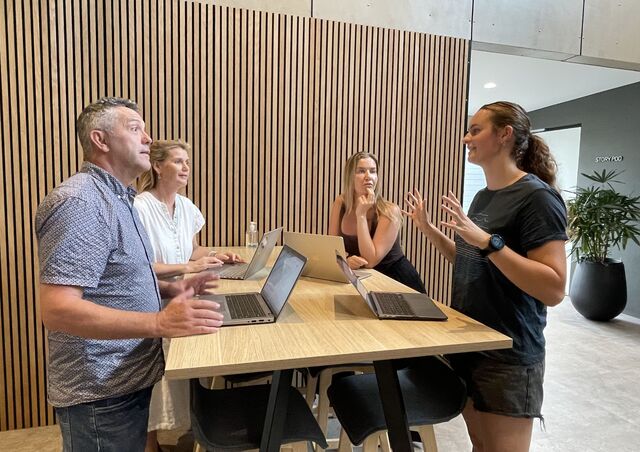
For Information Technology (IT) departments to best meet the business needs of their Council they first require a very good understanding of what those business needs are, and second, be very good at communicating with their colleagues from other areas of Council. In short, they need good ‘soft’ skills.
It is my belief that there are two main ways to address a Council’s business needs.
First is what I call the ‘big hammer’ approach – where there is a total focus on technology to the exclusion of all else. The determination is to go for the biggest, the brightest and the best – regardless of how cost inefficient that might be. It’s like a dog chasing its tail to ensure you have enough
PC power, server power, disk space, network capacity and the latest technology to meet any possible requirements your internal customers may need. It’s a lovely idea if you have an inexhaustible supply of funds and it certainly will make you very popular with a lot of vendors.
The more sensible approach – the soft approach – is to really understand the business objectives of your organisation. The focus has to be on process refinement as well as anticipated outcomes. The starting point should be: what are my customers’ needs? Systems support should always be designed with that ultimate objective in mind.
Potential hardware and software solutions should be examined to assess whether refinement of existing processes would produce better outcomes. This provides a holistic solution that maximises efficiency and effectiveness.
Clearly, this second approach is a very simple formula but it is surprising how often it is ignored or done poorly. The key to success is to have IT business analysts who can speak the language of their colleagues. By really getting to know their specific business needs, the most appropriate IT solutions can then be determined.
It is also essential to take a whole of organisation overview, as this is the only way to minimise expenditures and maximise efficiencies. So, let’s go through this step by step.
Step 1
Get the basics right. If your IT staff are spending their day fire fighting, that is dealing with poor quality equipment, and trying to fix the same problems time and time again, you will go nowhere. Find out what the biggest issue is and address it, next find out what your biggest issue is and address that. Once you have gone through this process you can start to address the real business issues.
Step 2
Don’t talk to your customers or colleagues about technology unless you are 100 per cent sure it will address a priority business need, and even then spend more time talking about their actual business needs.
Step 3
Encourage your internal customers to talk about their business needs before analysing perceived technology needs. Remember: you are the expert in the field in which you are employed.
Your Council colleagues will always have a better understanding of their business than of IT technologies, however they also may have a preconceived idea of a solution from a glossy brochure. When you all understand what the expected outcome is, you can suggest the most appropriate technology solution.
Step 4
Implement a whole of organisation assessment of business needs and capabilities. Then determine how technology can help meet the gaps. This must involve an assessment of the highest priorities for each of Council’s business units and what assistance, such as change management, human, hardware and software, they require to meet their goals.
Step 5
Work out where you can get quick wins. If you follow the steps your IT section/branch should be developing a reputation for quality service in the way it tackles day to day issues. Now is the time to deliver some real business solutions/improvements that help make a difference to the customers. A word of warning here: if the solution involves a big dose of technology or is splattered with acronyms, you may like to reconsider the path you are going.
Step 6
Now is the time to start bringing it all together. You should have a very good understanding of organisational capability, built on a clear understanding of each unit’s needs and capabilities. Compile these understandings into a preliminary plan and talk it through with your colleagues once again to ensure there are no misunderstandings or gaps in your strategic overview. Then you can compile costings and make recommendations.
All the above is not rocket science but it does take time, and like it or not you will not always receive the cooperation or support you expect.
To achieve whole of organisation improvement, it is likely you are going to be challenging some longterm corporate habits. That’s never easy but it shouldn’t be avoided. Quality IT solutions involve more than just technology. If you decide to go down this path you will experience both positives and negatives.
Vendors, for example, don’t like losing access to individual business units or even the CEO. It is far easier to crunch sales when dealing with someone who is inexperienced in the solution suggested or the possible pitfalls. But when the value of the enhanced organisational efficiency you have achieved is understood, your own standing and credibility will be greatly improved.
Any such negativity will be far outweighed by positives such as developing a reputation as a quality service provider. Once colleagues realise you can enhance their professionalism, they will be ready to explore even more technology solutions.
* Jim Barclay is Chief Information Officer at Logan City Council. He can be contacted on (07) 3412 3412 or email jim.barclay@logan.qld.gov.au