Mayor Carol Adams, Kwinana Town Council, WA
Q. How long have you been on Council?
I was elected as a Councillor for the Town of Kwinana in 1997, elected Deputy Mayor in 2005 and Mayor in 2006. I am very proud to say that I am the Town’s first female Mayor.
Q. Why did you become involved in Local Government?
Like many of my colleagues, I was initially attracted to Council by a single issue that impacted me after Council proposed to rezone a park that I regularly used. I thought the best way to really have my ‘finger on the pulse’ in relation to what’s going on in the Town and the strategic vision for its future was to seek election as a Councillor, a decision I have not regretted.
Q. Tell us about your Local Government area.
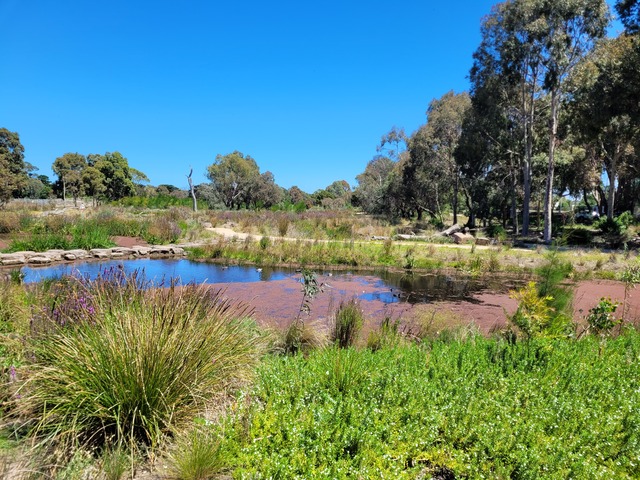
Kwinana is situated 40 kilometres south of Perth and is part of the rapidly expanding southern corridor that is experiencing exponential growth. It is a unique community, set among extensive native bushland and public open space. We are in close proximity to the Kwinana industrial strip, which injects an estimated $11 billion a year into the Western Australian economy and indirectly employs over 34,000 people.
Kwinana’s residential development began in the 1950s in parallel with the development of industry along the coast. However, in the following three decades, the industrial area suffered decline, causing social issues within the township. Unfortunately, little was done to provide the community with the infrastructure that was being put in place in surrounding areas.
Thankfully Kwinana’s fortunes have changed in recent years and the Town is currently on the brink of massive growth and development. Government and private investment expected over the next decade adds up to an incredible $11.5 billion, including a $340 million Town Centre Revitalisation project.
Q. What key challenges are facing you and your Council?
While the future is bright for Kwinana, the hyper growth period we are experiencing is somewhat a double edged sword. The influx of new residents moving to Kwinana is financially draining and as a Council it is a struggle to provide residents in our new suburbs with basic community facilities, such as community centres, playgrounds and sporting ovals. There is an assumption by many people that new development creates rates, therefore the Local Government will be cashed up and everything will be fine. In the case of Kwinana, many of our facilities are long overdue for major refits, rebuilds or replacements. Many areas in the Town are Government owned and therefore unrateable. However, as challenging as it is, I am thankful to have very progressive and forward thinking Councillors behind me who are not afraid of making the hard decisions needed to meet the challenges head on.
Q. What innovative projects is your Council working on?
Last year, the Town launched a marketing campaign – ‘Looking Forward’ – aimed at building confidence in Kwinana as a place to live, invest and explore. By changing the negative perception that people historically had about the area, and creating a wave of excitement, we have managed to attract a huge amount of interest from investors and fast track developments. We have also built community pride and won the attention of both the Western Australian and Federal Governments.
Q. Tell us about a specific success you have had in Local Government.
Being Mayor at a time when there is such massive change underway is certainly something of which I am increasingly proud. The decisions being made now by myself and my fellow Councillors will ultimately shape how Kwinana will look in the future. Success is also about attracting political attention to the Town, and I know that this has been achieved through carefully planned stakeholder management. Many of the achievements we have acheived today, such as the Town Centre revitalisation project, will probably come to fruition after I retire from Council, but I will get immense satisfaction from being involved in the planning for those projects and being invited to their opening.
Q. What are the key aspects of being a good Councillor?
Teamwork, teamwork and teamwork! Not just teamwork with your fellow Councillors, but teamwork with your CEO and Executive. Teamwork embodies trust, confidence and mutual respect so that a shared strategic vision for the Town can be achieved. When I look back over my two years as Mayor and the many achievements Council has had, the common nexus is teamwork and a shared vision for the Town’s prosperity.
Councillor Henry Zelones, Armadale City Council, WA
Q. How long have you been on Council?
I’ve been a member of Armadale Council for nearly 17 years.
I first ran for Council in 1981 and my interest and involvement in Local Government has been unbroken for almost 30 years.
Q. Why did you become involved in Local Government?
My wife and I have been active community members since the early 1970s. We have served on many community groups typical of a couple bringing up children. It was my involvement with the local Chamber of Commerce that led me to the door of the local Council on many occasions. When I first joined the Chamber of Commerce, there appeared to be many issues arising between Council and the business community, mostly fought out in the local press. Resolutions to issues were far and few between, so when I was elected President of the Chamber, I met with the Town Clerk and the Mayor of the day to propose a resolution to end the feuding between the two organisations. While an agreement was reached and the relationship improved, it was plain to me that if I were to achieve any real benefits for the local business community, then I was going to have to get involved in the decision making process. When I completed my term as Chamber President, I stood for election at the earliest opportunity.
Q. Tell us about your Local Government area.
The City of Armadale is a well established community that traces its history back to the early settlement of the Swan River colony. The City lies at the base of the Darling Ranges and is approximately 30 kilometres southeast of the Perth CBD. As one of the largest metro Councils, Armadale covers 545 square kilometres and is classed as an outer metropolitan and mainly working class dormitory area. The City is currently undergoing a strong redevelopment phase and the population is expected to grow from 55,000 to 100,000 over the next 20 years or so. Our Council comprises 14 elected members, with the Mayor being elected from our own number.
Q. What key challenges are facing you and your Council?
Some people believe that any growth is good, but it can also be a double edged sword. If it’s too fast, it can be a problem to manage. We have watched communities here in Western Australia claiming to be the fastest growing City, fastest growing Shire or fastest growing coastal community, but the difficulties those Councils face in programming and budgeting for the services needed by these fast growing communities can be a nightmare.
Asset preservation is very topical in Western Australia, and the gap of what is needed is growing daily. Now add to that a need to invest in new infrastructure, keeping rates and debt at manageable levels – it is a difficulty more than one Western Australian Council is struggling with.
Finding skilled staff in an economy that has two per cent unemployment is a conundrum that I would not have believed we would be facing when I first joined Council.
In the past eight years, we have been working to long term forecasts with five, ten and 15 year budgets to match those predictions. We need a number of new facilities to match the growth that has been predicted.
Our debt servicing is very low, but our annual rate increases have been above average. While we have our critics, our City has been recognised as being one of the best managed in Western Australia and I am proud to be a part of it.
Q. Tell us about a specific success you have had in Local Government.
Unlike our eastern State counterparts, the elected membership of Local Government in Western Australia is still of a voluntary nature, so many of us hold full time jobs and still work for our communities. I derive a great deal of satisfaction in being able to also contribute to other spheres of government and the community as a result of my long tenure with Armadale City Council. I currently represent my Council in a number of capacities, such as a State Councillor with the Western Australia Local Government Association. I have also gained an appointment to the Western Australian Planning Commission as a Deputy Commissioner, and in January this year, I was appointed to the Western Australian Heritage Council. All these organisations are held in high repute by the State and Local Governments and the broader Western Australia community.
Q. What are the key aspects of being a good Councillor?
There are many answers to this question, but I guess for me it’s being as well trained as I can be, responsive to my community and never being afraid to stand up for what is right. I also believe that respect for my colleagues and the staff
I work with is absolutely essential.