The overwhelming majority of delegates agreeing to a set of principles regarding constitutional recognition of Local Government, as well as their unanimous endorsement for the Summit Declaration spelling out these principles in more detail, has been described by the President of the Australian Local Government Association (ALGA), Councillor Geoff Lake, as both a remarkable achievement and an historic juncture for Local Government.
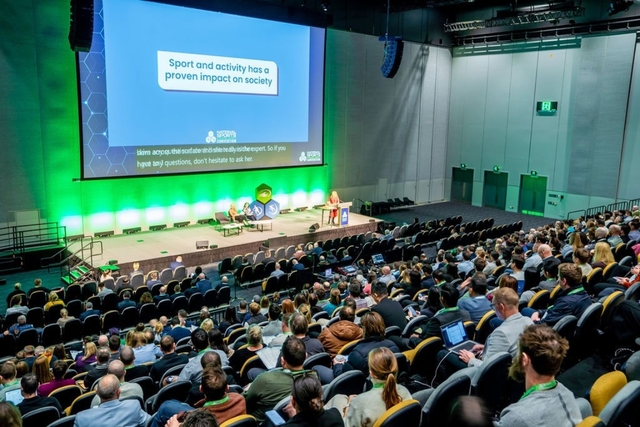
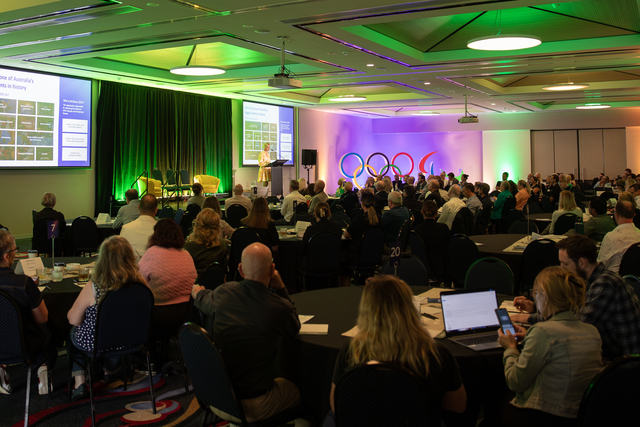
Almost 600 delegates representing councils from across the nation met in Melbourne from 9 to 11 December for the Local Government Constitutional Summit – A Special National General Assembly organised by ALGA.
In November, at the inaugural meeting of the Australian Council of Local Government, Prime Minister Kevin Rudd called on Local Government to develop a blueprint for constitutional reform.
“The outcomes from ALGA’s special convention in Melbourne in December will be especially important for the Commonwealth Government as it moves forward on this important matter,” the Prime Minister said.
“That is why we have not predetermined a timeline or set of words. Rather than us dictating from on high, we want to take your views into account.”
When taking questions at the Constitutional Summit, Minister for Infrastructure, Transport, Regional Development and Local Government, Anthony Albanese, reiterated this position, saying the Government clearly wants a “bottom up not top down proposal”.
“You are well placed to know what is likely to be accepted in your area,” Minister Albanese said. “But you need to get a unified view to put forward to the Commonwealth and it must permeate from the bottom or grassroots.”
Over the three days of the summit, delegates heard from a number of Federal MPs, including Minister Albanese; the Attorney General Robert McClelland; Opposition Leader Malcolm Turnbull; and Shadow Minister for Local Government and Leader of the Nationals, Warren Truss.
Various Constitutional Law experts also guided delegates through the intricacies of Section 128 of the Australian Constitution – the requirements for change via referendum, and the factors that have led to just eight of the 44 previous proposals being successful.
In his opening address at the summit, ALGA President, Councillor Geoff Lake, said that it was vital for Local Government to get its message right.
“Reasons such as we deserve recognition, that we want it to protect us from cost shifting and amalgamations or we want more money, will not wash with the average voter,” Councillor Lake said.
“We must spell out the benefits that such recognition can deliver to communities. The modernisation of roles and functions within our Federal system and the need for a better funding structure so services are delivered to people more efficiently and effectively are paramount.
“The preferred model we come up with must be palatable to the electorate. Symbolic recognition will be hammered. In the current global recession it would not be taken seriously. People need to see it will make a positive difference to their lives.
“We also must take on board that we are not winning in the public relations stakes, and there is plenty we can do to turn this around.
“Perceptions of councillors behaving badly, officers not performing well and poor policymaking cannot be ignored. A poll earlier this year singled out Local Government as our most unpopular, corrupt, unnecessary and embarrassing sphere of government!
“So the path forward is complex, full of obstacles and needs a more careful, strategic approach than has ever been undertaken by Local Government in the past.
“It is now over to us to give it our best shot to develop a strong case and bring our communities with us.”