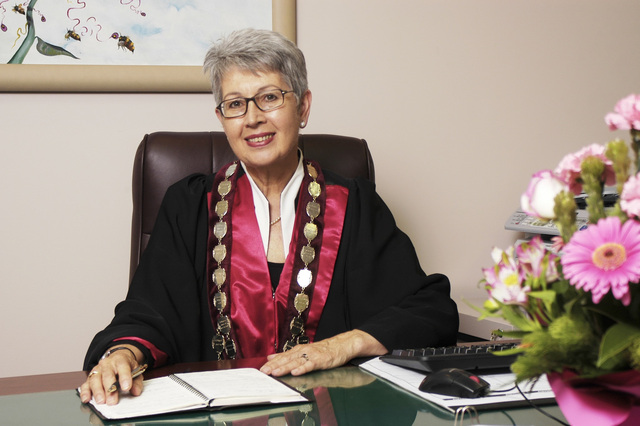
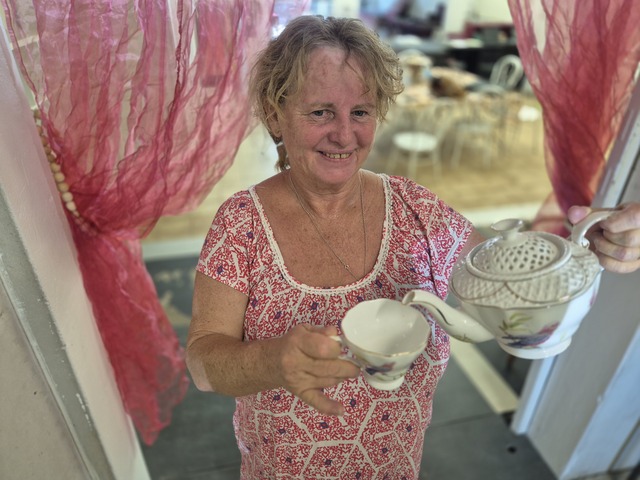
Councillor Mary Duniam, Waratah-Wynyard Council, Tasmania
Q. Why did you become involved in Local Government?
In 1952 my late mother, Iris Graham OAM, became the first woman Councillor on Burnie Council. The example of her tireless commitment to the community was an inspiration and one that I always wanted to follow. It was not until 2005 that I took the plunge, becoming a Councillor at my first attempt. I care deeply about the municipality, working with the community and endeavouring to meet constituent needs. I believe that as a Councillor, I may have some positive influence in preparing the groundwork for future generations in the Waratah-Wynyard Municipality.
Q. Tell us about your Local Government area.
The Waratah-Wynyard Municipality has a population of approximately 14,000 people and covers 3,500 square kilometres. It is bounded by Bass Strait to the north, Rocky Cape National Park to the west and the City of Burnie to the east. Wynyard, the largest town, sits on the banks of the Inglis River in the heart of North West Tasmania and has a population of approximately 5,700 people. A further 4,000 residents live in the nearby town of Somerset on the Cam River. The municipality also includes the beautiful coastal villages of Boat Harbour and Sisters Beach, the rural town of Yolla and the former historical mining villages of Corinna and Waratah, the gateway to the spectacular Tarkine Wilderness.
Our municipality is recognised for its primary industries including dairy, beef, a wide variety of vegetables, horticulture and forestry enterprises. The area has become well known for the cultivation of tulips for export, and in spring, the vividly coloured rows of thousands of tulips swathe the lush volcanic plug of Table Cape.
Q. Tell us about your role as a mentor at the local high school.
In 2009, I became involved in a student mentoring program called Co-Pilots. This is a three month program with a taskforce of volunteers from the community who are matched to individual students. They meet with the students on a weekly basis to undertake activities that develop their special interests and skills. Through interaction and guidance, this program gives students the opportunity to develop life and social skills, to build confidence, capacity, individual potential, and to value their own self uniqueness.
Q. What innovative projects is Council working on?
In 2008, Waratah-Wynyard Council appointed a new General Manager, whose departure from Circular Head Council in an adjoining municipality left a vacancy that was difficult to fill in the current employment climate in Tasmania. As a consequence, the idea for sharing the General Manager was mooted as a possible solution for both councils and was identified as a strategic opportunity for expanded resource sharing between neighbouring councils. A Resource Sharing Agreement was drafted and adopted by both councils, and a shared committee was established. This Agreement provides the mechanisms for effective collaboration, accountability and reflects the scope of resources to be shared and operations overseen. It is hoped the resource sharing model will achieve efficiency through standardising the way things are done, and economies of scale through consolidating activities and sharing resources.
One of the key issues in assessing readiness and/or willingness for change was for both councils to identify ‘where they are now’ against ‘where they could be’. While considerable progress has been made, it really is just the beginning of the journey towards ‘sharing the gain’.
Q. Tell us about a specific success you have had in Local Government.
In 2009, the small school at Waratah closed due to a lack of student numbers. This had a devastating effect on community spirit. For over 12 months, I worked with the community to develop its own Community Development Strategic Plan, with four key drivers being health and wellbeing, tourism, business development and community development. I successfully engaged the community in this initiative, and as a result they came together to establish their own Waratah Community Reference Group. The Group has a purpose to establish a collaborative and inclusive framework for dealing with local issues; to be a reference point between Waratah-Wynyard Council and the community; to be a reference point between the Tasmanian Government and the community; to effectively communicate between community members, and between community and Council; and to be a formal body that can seek support funding for community wellbeing programs and infrastructure developments.
Mayor Don Thwaites, Kentish Council, Tasmania
Q. How long have you been on Council?
I was elected in 2003 after a period of Council being under administration. At that time, the residents of Kentish overwhelmingly voted in a plebiscite to keep Kentish as a separate Council and not amalgamate with an adjoining Local Government. Our Council had plenty of new blood and we all learned as we went along.
I had a go at joining Council in 1989 and got a staggering 29 votes. That was best described as a “learning experience”.
I was elected Mayor in 2007 after the previous Mayor retired, and elected to the management committee for the Local Government Association of Tasmania in 2010.
Q. Why did you become involved in Local Government?
I work in a small Government shop in town called Service Tasmania. We have State Government information and payment services, free internet, registration and licencing, a Centrelink agency, Medibank and so forth. It is a good way to meet everyone in the area, as most call in at some time or other to make a payment or an enquiry. Many local residents got to know me through the store and used to talk about all sort of things, from the weather to politics. A few people suggested I stand for Council and I started thinking about it. I was not happy with some things in our Council area and thought I could change them overnight, if only I could be part of the decision making process. I also kept having ideas that I thought would make it better here for everyone, so I stood for Council again. Being a Councillor makes you part of a team of people and I was surprised to get both acceptance and strong resistance when the simplest matter would come up for discussion. The wide variety of ways that you can look at an issue always astonishes me.
Q. What makes Kentish special or different?
Kentish stretches from Cradle Mountain to the dormitory suburbs of Devonport. Most people in Australia and many from overseas have heard of Cradle and want to see it. It should be one of everybody’s top 1,000 things to do in life. Along with the rugged beauty of Cradle Mountain, there is a fascinating history that is revisited each year on New Years day. We have other beautiful mountains here too, and they provide a stunning backdrop for our farming and residential areas.
Kentish is called Tasmania’s outdoor art gallery, and the main town Sheffield has over 55 murals painted on its walls. There is also an annual festival here called Mural Fest, which is a competition among nine mural artists to see who can paint the best mural based on a given theme.
Tourism is probably as big an industry here as farming, and our towns are trying to attract the tourist dollar. The town of Railton is growing topiary (trained perennial plants) everywhere and Wilmot has a number of very interesting letterboxes on its rural mail route.
Q. What key challenges is Council facing?
I guess most councils have a hard basket and we are no different. Our roads and halls are good, we have 106 bridges that all need maintaining and this is expensive, but achievable.
Kentish is pretty small with just over 6,000 residents, and that makes it hard to find rates income. Compared to surrounding councils, our rates went from being the lowest ten years ago (but infrastructure was being left run down), to overcompensating. We are now cutting back and trying to run more modest programs.
The issue of Lorinna access is a famous problem in Tasmania. The small isolated community of around 60 people in a valley in the mountains is divided over some wanting their old road back and others wanting a new road. At present, neither party has their way as Council closed the old access road as it was dangerous. A large book could be written on the problems this road has caused.
Q. What innovative projects or policies is Council working on?
At present we are sharing our General Manager with an adjoining Council. This is working well with reduced costs, and some sharing is being set up to form teams of planning and engineering staff to manage both councils.