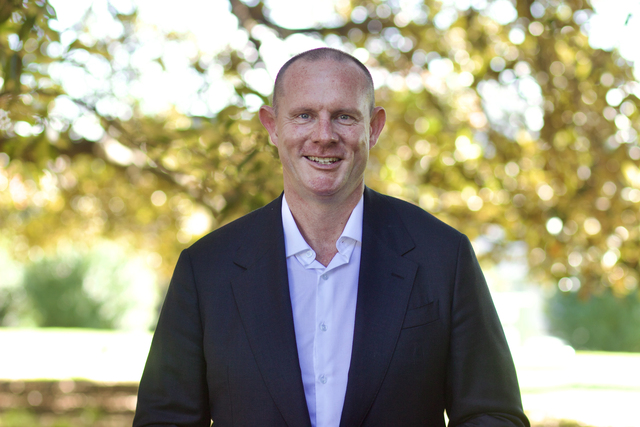
In our October edition we featured answers to questions we put to the Minister for Regional Australia, Regional Development and Local Government, Simon Crean. The following is the written responses provided by the Shadow Minister, Senator Barnaby Joyce, to the questions we put to him.
Q. Can you comment on the synergies of your shadow portfolio combining Local Government with Regional Development and Water?
The issues that arise in the Local Government policy cut across a range of portfolios. Local Government is our closest level of government to the people, so the bread and butter issues of transport, infrastructure, population, housing and water all cut across this portfolio. In my specific portfolio areas of regional development and water there is a close relationship with Local Government issues.
Local Government are the eyes and ears which help the Commonwealth understand the different regional issues that arise across Australia. When the Coalition were last in government the Area Consultative Committees had a close relationship with Local Government and the power to provide real solutions without becoming entangled in bureaucratic red tape. The Coalition’s regional development policy at the election called for a return to these arrangements.
Water issues remain challenging for many Local Governments despite the ending of the worst drought in a century (in eastern Australia at least). I understand the challenges many Local Governments face in implementing the National Water Initiative and I wish to engage with them further on these issues.
Q. What do you see as the key challenges currently facing Local Governments and their communities?
I think financing for Local Governments has been and will remain their principle challenge. The fact is that if you don’t have the resources, you won’t be able to fix the transport, infrastructure and housing issues.
A major challenge for Local Governments is that the costs of maintaining what they are responsible for increasing exponentially, for example construction costs, have been increasing at 10 per cent over the past three years. The rateable base for Local Government is clearly not going to match this pace. We need to make sure that we find alternative ways of making sure that the resources are available to maintain Local Government’s responsibilities. The Coalition remains a strong supporter of Commonwealth direct funding of Local Governments and we will examine ways of strengthening the support that the Commonwealth can deliver to Local Governments.
Q. With the minority government and the increased opportunity for both the Coalition and Independents to put forward legislative proposals, which Coalition policies relevant to Local Government would you like to see presented?
The Coalition went to the election with a $600 million Bridges Renewal Program to help Local Governments repair or refurbish the bridges they are responsible for. The Commonwealth was to provide $300 million for this program to be matched by State Governments. Effectively, this program was a Bridges to Recovery program. We think the Roads to Recovery program has been a great success for Local Government and local communities. All Australian Governments should be looking to it as a template for future policies involving Local Government.
Q. What about Coalition policies relating to Regional Development and Water?
The centrepiece of the Coalition’s policy on regional development was to see more power delivered to Regional Development Australia bodies. Regional development will only work if it is driven by ideas from the regions, not by bureaucrats from Canberra and the state capitals.
Mr Crean’s talk about more empowerment” for regional communities is welcome but we need to see results from Labor not more words.
On water, the Coalition went to the election with a comprehensive water policy which allocated funds to secure new water supplies, provide structural adjustment assistance in the Basin and prioritise the infrastructure investment which can deliver more water for communities and the environment. Most importantly, the Coalition stressed that it would implement a good Basin plan not any plan. Labor made a reckless promise during the campaign to implement what the Murray-Darling Basin Authority said, sight unseen. This was despite the fact that the Minister has the final say on the Water Act.
Much of the frustration that has emerged in response to this “guide” is a direct consequence of Labor failing to make clear that it would only implement a plan that balanced economic, social and environmental factors.
At the election, the Coalition also promised $100 million for Community Water Conservation Grants to help Local Governments, and others, to find better ways at conserving, including through the greater use and reuse of stormwater.
Q. With the Gillard Government and Australian Greens agreeing to a referendum for Constitutional Recognition of Local Government during this Parliamentary term, will the Coalition support this as well? Why or why not?
The Coalition supports constitutional recognition of Local Government. By its actions in government, the Coalition supports funding Local Government and we support changes that can put that on a firm legal footing. Nonetheless,
I note that a referendum on Local Government has failed twice already. It is important that the Local Government sector develop a detailed proposal which has widespread support. Ultimately, it does not matter what I or the Coalition says we need the people to support it for the referendum to succeed.
Q. What do you see as the critical issues facing communities from the recently released Guide to the Murray-Darling Basin Plan?
The most critical issue is that the current plan puts the economy and social fabric of communities behind the environment. I support a plan that delivers more water for the environment. I supported the Howard-Turnbull which put aside $10 billion to do just that. But we can’t forget the towns and communities which rely on the Basin in the process.
The Murray-Darling Basin Authority has been acting under the presumption that the Act puts the environment first. The Labor Government Minister, Tony Burke, now says he has legal advice which says they are wrong.
The whole thing is an absolute stuff-up. Labor have been all over the shop on this issue. The new Minister has been making the right noises on community concerns, but given their record on this issue, how can you trust Labor?
If I was a Local Government in the Basin, I’d be wanting some strict assurances from Labor that it will deliver a different approach than what’s in the current guide.
Q. Any other comments?
In the last 15 years, we have seen more and more government responsibilities centralised in Canberra. This has been understandable response to the failures of State Governments but Canberra cannot make all the decisions. That’s where Local Governments are such an important conduit to the on the ground concerns of everyday Australians.
To respond to these concerns is why we are in politics, and that’s what makes Local Government such an important part of our political furniture.