Off the west coast of New Zealand at 8.45am EST on Thursday 18 November, a powerful, magnitude 8.7 undersea earthquake was recorded.
At 9.13am EST, a tsunami land warning message was issued, throwing Redland City’s Local Disaster Management Group (LDMG) immediately into action.
Thankfully, this was a fictional scenario as part of a disaster management training exercise called ‘Operation Argus’.
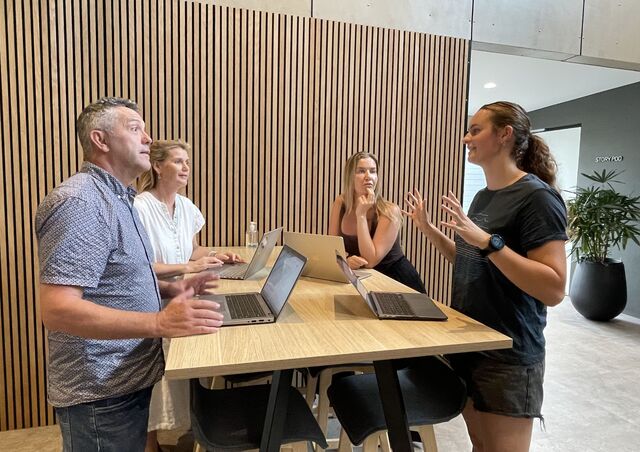
For several hours, LDMG members enacted Redland’s Tsunami Plan to protect people and property in the Redlands before the wave’s impact, having been given only four hours’ warning. Next, the LDMG planned what would happen in the recovery stage after the impact of the hypothetical two metre wave, comparing the scale of damage to that from a Cyclone Larry type disaster.
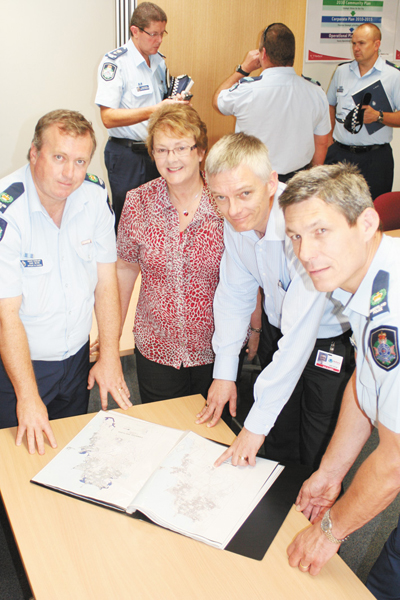
Council was well represented at the training exercise, with key input from LDMG Coordinator Nick Clarke, Council CEO Gary Stevenson, and LDMG Chair, Mayor Melva Hobson. Also on hand were senior staff from emergencies services agencies.
The exercise demonstrated how all agencies work closely to coordinate disaster management at local level – which is the purpose of the LDMG.
Gary Stevenson said that while tsunamis represent a very low risk, they can have catastrophic effects, as borne out by the lessons from Operation Argus.
“Given the limited time we had to act, it was essential that information reaching people was clear, consistent, accurate, and communicated as effectively as possible,” he said.
Gary Stevenson said it had been a busy year for disaster management in the Redlands.
“We launched the Redland City Disaster Management Plan in August, work continued on the award winning Seniors Emergency Preparedness Project, and a storm season awareness campaign for residents is currently in full swing,” he said.
The Redland City LDMG comprises Redland City Council, Emergency Management Queensland, State Emergency Service, Queensland Police Service, Queensland Fire and Rescue Service, Queensland Ambulance Service, Redland Hospital and Energex.