Home » Solar Energy Safety: Controlling Risk at Government and Community Facilities*

Solar Energy Safety: Controlling Risk at Government and Community Facilities*

Like any source that results in electricity, solar energy installations come with risk.

Generally exposed to the elements, solar arrays can be affected by not only mechanical malfunction, but by environmental conditions such as wind, lightning and vermin. These influences can in turn cause short-circuit or earth fault that could ultimately lead to electrocution or fire.  

Solar inverters (which convert the variable direct current (DC) output of a PV solar panel into a utility frequency alternating current (AC)) are often equipped with displays that light up when a safety hazard occurs. However, inverters are frequently placed in areas such as a rooftop or garage, where alarms can go unnoticed. Fortunately, compact, standards-compliant solar safety products now exist that can be placed near the energy user or power operator – for example, in an office or kitchen – and emit both an audible and visual alarm in the case of a fault.

Local councils and communities: added safety concerns
Local government and community facilities have added reason to focus on safety due to the increased risk of damage, injury, and loss of life that may be present at facilities with high occupancy. Consider a public library, community centre or theatre, for example. Volume occupancy from both the general public and disabled patrons adds to potential panic and risk of injury in the case of a safety emergency.
Local councils may also need to adopt a more robust risk management approach due to insurance requirements or government property and/or personnel protection policies. Further, stringent safety measures help to ensure efficient and proper use of public funds – both from a capital spend and, in a worst-case scenario, a disaster cleanup perspective.

Government standards driving safety
Australian solar safety standards assist in designing solar system setup, access and maintenance procedures – whether in residential, commercial or government/community facilities. The AZ/NZS 5033:2012 standard, ‘Installation and safety requirements for Photovoltaic (PV) arrays’ (clause 3.4.3), specifies that low-voltage PV arrays must be equipped with an alarm that alerts the solar user when an earth fault has occurred, and is also used to spur corrective action. Additional safety standards apply when DC levels are above 600 volts. These include restricting solar array access to authorised personnel only, with lockable entry and appropriate signage.

Visit website: www.solarinception.com.au

*Copy supplied by Solar Inception

Digital Editions


  • Council recognises Winter Olympian

    Council recognises Winter Olympian

    Purchase this photo from Pic Store: 549624 Australia’s most successful Winter Olympian, Jakara Anthony OAM, has been presented with the inaugural Geelong Medal by Mayor…

More News

  • Paving the way sustainably

    Paving the way sustainably

    City of Moreton Bay is paving the way for more sustainable roads, partnering with infrastructure company Fulton Hogan in 2024/25 to facilitate a Queensland first research and development project aimed…

  • Taking a hard-line on soft plastics

    Taking a hard-line on soft plastics

    Giving soft plastics a second, third, fourth life – and counting. “Nice work Surf Coast, your soft plastic recycling efforts are paying off, with the first shipment from Anglesea now…

  • Greater Geraldton bridge lauded

    Greater Geraldton bridge lauded

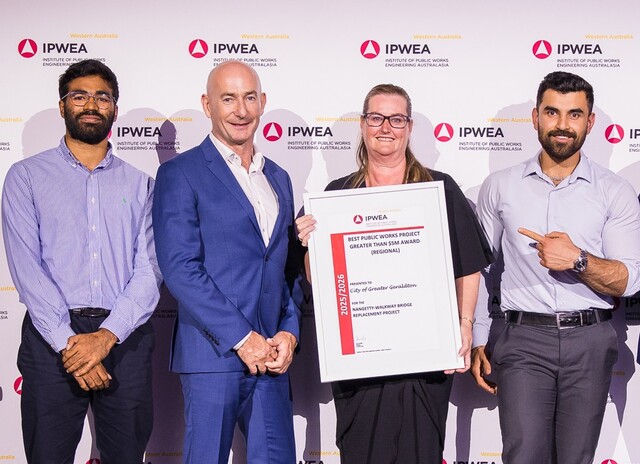
    City of Greater Geraldton bridge replacement project wins prestigious engineering award Inovative engineering has earned the recently completed Nangetty-Walkaway Road Bridge Replacement Project top honours at the 2026 Institute of…

  • New paint technology at Alexandrina

    New paint technology at Alexandrina

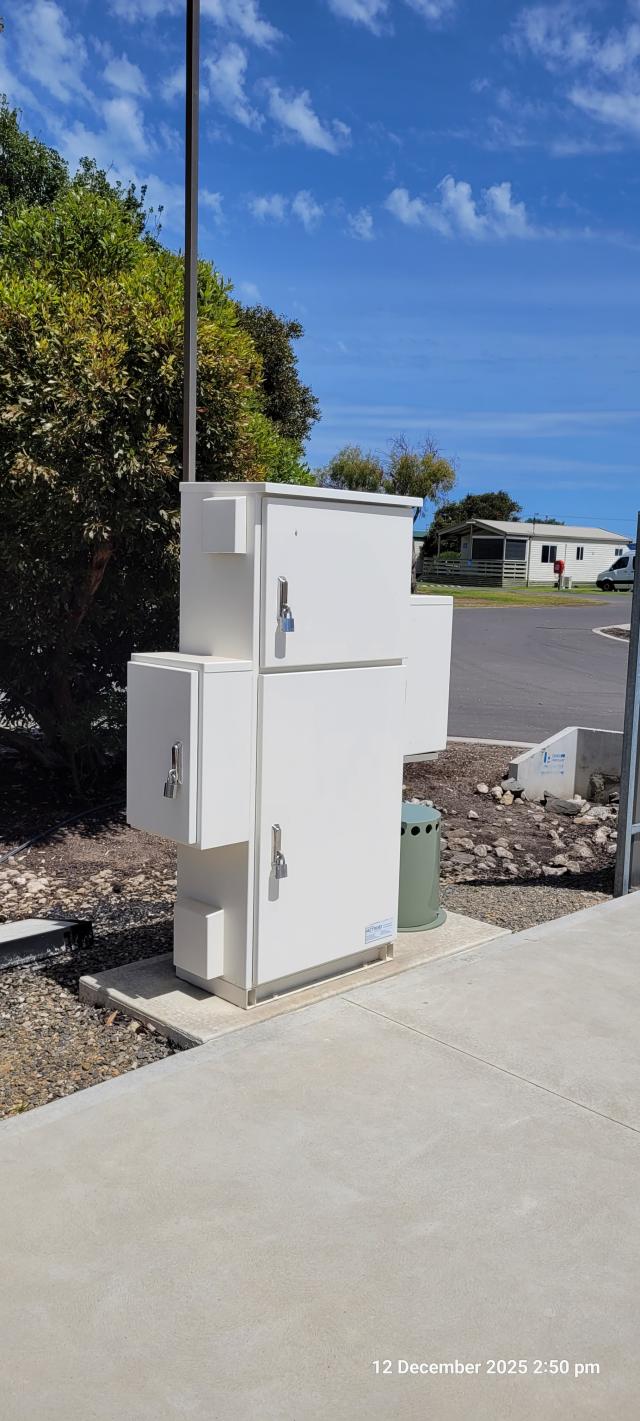
    A paint trial is taking the heat out of Alexandrina’s council infrastructure. Alexandrina Council’s Alexandrina Wastewater division is trialing new paint technology to cool down the temperatures inside cabinetry housing…

  • Rotary honours library employee

    Rotary honours library employee

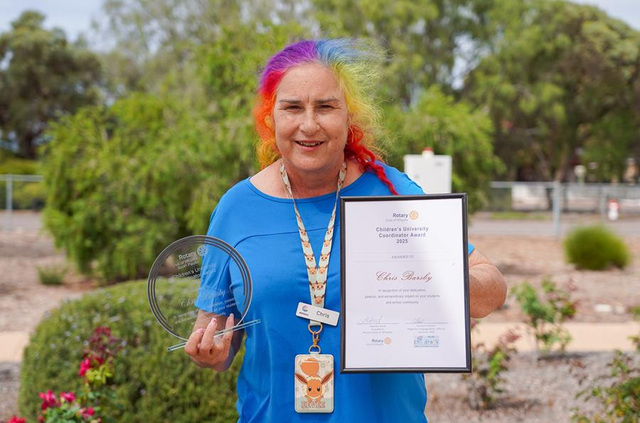
    Whyalla Public Library’s Chris Barsby has been recognised for her outstanding contribution to youth learning, receiving a Special Community Award from the Rotary Club of Whyalla. The award celebrates her…

  • Surfcoast Ecotourism champs

    Surfcoast Ecotourism champs

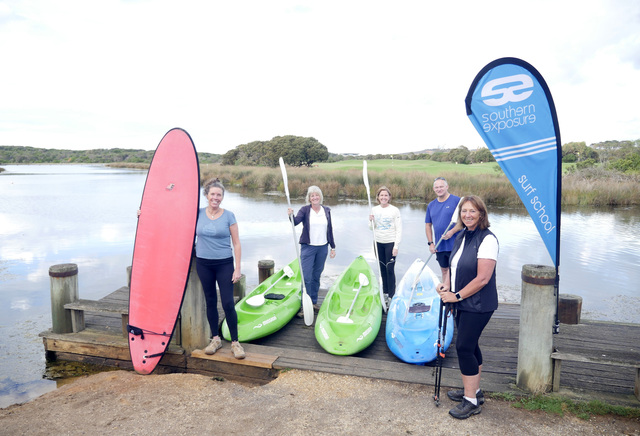
    Ecotourism Australia is proud to announce that the Surf Coast Shire has officially earned ECO Destination Certification, formally recognising the region’s adherence to global best practice sustainable tourism and environmental…

  • Special transformative project for Bayside

    Special transformative project for Bayside

    In the northwest pocket of Bayside City Council’s municipal boundary, something very special is happening. Yalukit Willam Nature Reserve is a transformative project. The former golf course-to-nature reserve conversion is…

  • Big attraction for tiny town

    Big attraction for tiny town

    Dozens of tourists have created history as the first passengers in decades to arrive in the tiny southern Queensland town of Thallon by rail. Excited passengers travelled for hours on…

  • Together Butchulla Talk

    Together Butchulla Talk

    A new Indigenous book celebrating the Butchulla language and local animals was launched at Hervey Bay Library earlier this month with storytime, language, dance and art activities for families to…

  • New Logan arena

    New Logan arena

    An upgraded arena for equestrians has officially opened at Skerman Park in North Maclean. Logan City Council delivered the $928,000 project, which includes a weatherproof roof, to support members of…