Queensland’s 77 local governments are entering a crucial new phase in their role of ensuring their communities continue to enjoy the benefits of economic growth and a quality lifestyle.
As community expectations about the scope and level of services that councils provide continue to grow, the revenue sources that local government has traditionally relied on to deliver these services are shrinking.
Both the Federal and State Governments have made it clear in recent times that they expect local government to have a greater role in deciding the future of their communities.
The shorthand term for this policy goal is “empowerment’’.
It is a goal the Local Government Association of Queensland (LGAQ) has long supported but we are also ever vigilant in ensuring it is genuine, and does not merely lead to the costs of service delivery being shifted on to councils and, in turn, their communities.
Three years ago, the former Bligh government reduced and capped infrastructure charges levied on new developments.
That move is estimated to have cost councils, and ultimately ratepayers, $120 million to $150 million a year since its introduction.
That is on top of the $800 million a year councils lost from other decisions of the former Bligh government, namely the abolition of infrastructure subsidies paid to councils, the restriction on southeast Queensland council water dividends and extra costs to councils of having to provide new sewerage, waste and drainage facilities to an impossibly high standard.
Put simply, councils lost control over a big slab of their revenues and spending. The current Newman Government is revisiting the state’s infrastructure charges framework and all the indications are the ability of councils to recover the costs of providing infrastructure for new developments will be further reduced.
What to do?
The LGAQ has always encouraged member councils to look carefully at their operations and think differently about service delivery but the need for innovative approaches and a firm commitment to productivity improvement has rarely been more acute.
Councils achieve some of this by using the services of our associated entities, including Local Government Infrastructure Services, Localbuy and
Propel Partnerships.
The work of these commercial services and others including our insurance schemes, has allowed LGAQ’s member councils to save up to $100 million a year.
But the real and lasting savings and productivity gains will only come when councils adopt innovative approaches to delivering services to their communities.
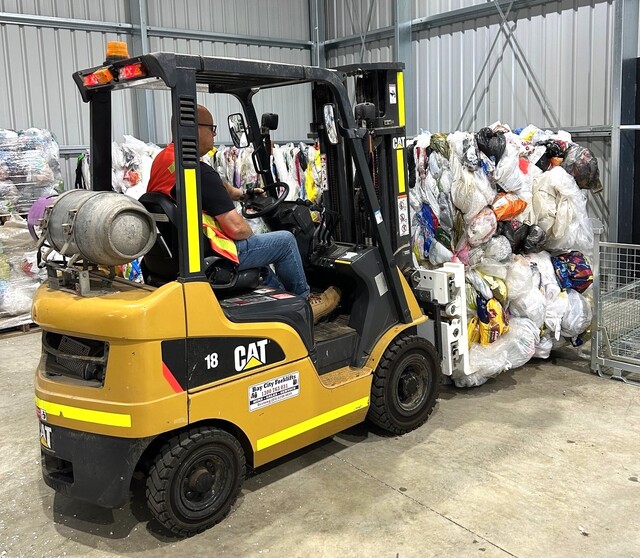
We are particularly keen for councils to see the benefits of regionally-based solutions to produce cost savings and efficiencies to services like waste collection.
This may not work for all councils but in times such as these, with fewer and fewer funds available to local governments, councils owe it to their communities to explore all opportunities to save money.
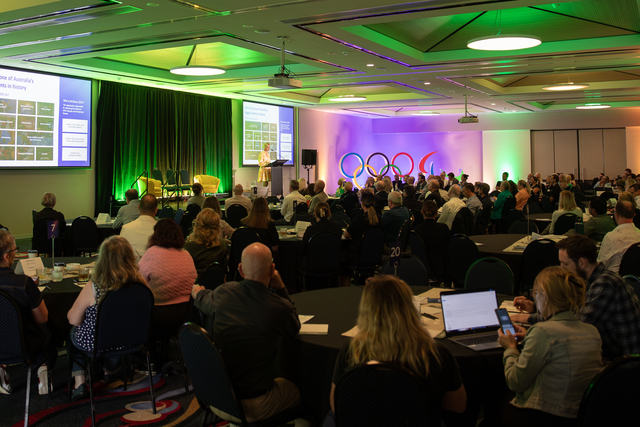
At last year’s LGAQ Annual Conference in Cairns, we were privileged to have as a keynote speaker United Kingdom Local Government Association(UKLGA) Chair Sir Merrick Cockell.
UKLGA member councils have recently suffered a 43 percent cut in state funding which, as Sir Merrick put it, not only reinforced to councils the traditional notion of doing more with less, but introduced a new condition: doing even more with even less.
Queensland councils are not facing such punishing circumstances but Sir Merrick’s message was that Australian councils are facing similar community demands.
People are living longer and expecting more attention to service levels from all governments.
Indeed, a recent community survey commissioned by the LGAQ found that only a small proportion of people would accept a cut in services if it meant a corresponding reduction in rates and charges.
Almost half said they opposed or strongly opposed such a suggestion.
Survey results such as these suggest people will not tolerate a council administration that is not prepared to try new, less expensive ways of
delivering services.
The LGAQ will be doing all it can to convince our members to heed that notion over the next year.