Home » Better alignment of asset responsibilities and revenue-raising capacity in reforms is crucial

Better alignment of asset responsibilities and revenue-raising capacity in reforms is crucial

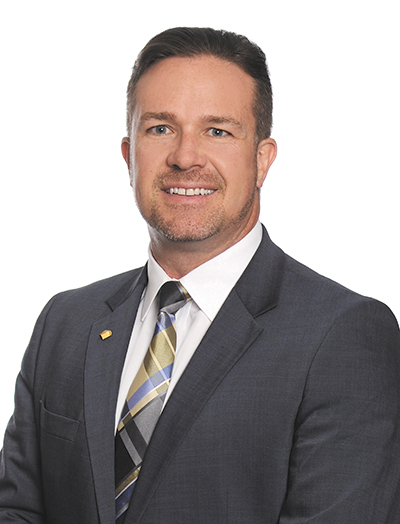
Mayor Troy Pickard, ALGA President

Last month, the Australian Local Government Association (ALGA) held its annual National Local Roads and Transport Congress, where the 2015 National State of the Assets: Roads and Community Infrastructure Report was launched.

Figures highlighted in this report raised some critical points about the funding arrangements in our Federation that need to be considered as part of the White Paper on Reform of the Federation and the White Paper on Taxation.

According to the Australian Bureau of Statistics, governments in Australia own a little over a trillion dollars’ worth of non-financial assets ($1088 billion) on written-down value. The same statistics show that the written-down value of Local Government non-financial assets is $354 billion, or approximately 32 percent of all government non-financial assets, and that of State Governments and the Commonwealth is 54 percent and 10 percent respectively. The remaining four percent is jointly owned by the Commonwealth and the states.

These figures paint a telling picture when examined against the revenue-raising capacity of each level of government.  
The Commonwealth has responsibility for just 10 percent of total government non-financial assets and yet it has access to approximately 82 percent of total taxation revenue.  
States, although responsible for 54 percent of total government non-financial assets, has access to about 15 percent of total taxation revenue.

And Local Government, responsible for nearly 33 percent of total government non-financial assets, has access to a mere three percent of total taxation revenue.

Tax revenue clearly does not align with asset responsibilities and we see the results of the skewed funding at the Local Government level with the State of the Assets report revealing that about 11 percent of Local Government assets are rated as being in poor or very poor condition.   

One of the objectives of the White Paper on Reform of the Federation and White Paper on Taxation is to align, as far as possible, the revenue-raising capacity of each tier of government with its responsibilities of funding and service delivery.  

The State of the Assets Report makes an important contribution to this debate and to the knowledge base of ALGA and indeed the Commonwealth and states, particularly as we progress the White Papers.
Digital Editions


More News

  • Lockyer send flood expert north

    Lockyer send flood expert north

    Lockyer Valley Regional Council has answered the call for assistance from a community impacted by Ex-Tropical Cyclone Koji, with a staff member from Council’s Disaster Management Unit deployed to support…

  • From books to bots

    From books to bots

    Tenterfield Library is proving that technology is more than just tools and devices. From coding and robotics to tech support, the Library has become a place where curiosity, connection and…

  • Major repairs for levee

    Major repairs for levee

    Goondiwindi Regional Council has endorsed its largest-ever capital works project to repair and reinforce critical sections of the Goondiwindi levee, following significant erosion after recent floods. At this week’s Ordinary…

  • Stretching for a good cause

    Stretching for a good cause

    Ballarat residents stretched, smiled and snuggled their way through a unique Kitten Yoga event that combined relaxation with a heartwarming cause – helping kittens find their forever homes. Hosted by…

  • Murray Library upgrade open

    Murray Library upgrade open

    The Murray Library refurbishment is now complete, and the revitalised space is officially open to the community. The upgrade delivers a brighter, more accessible and flexible library that reflects the…

  • Lockyer announce Scott Greensill as CEO

    Lockyer announce Scott Greensill as CEO

    Lockyer Valley Regional Council has appointed Scott Greensill as its new Chief Executive Officer. Councillors formally approved the appointment of Mr Greensill at a Special Meeting of Council in February.…

  • Myers resigns for health reasons

    Myers resigns for health reasons

    Wollongong’s Councillor Tiana Myers has resigned, as a Ward Three Councillor for City Council due to health reasons. Cr Myers was elected to Council in 2024 with a focus on…

  • Acknowledging women’s role in councils

    Acknowledging women’s role in councils

    Council representatives from across the state gathered in Sydney today for Local Government NSW’s (LGNSW) International Women’s Day event. Mayor Darcy Byrne, President of LGNSW, said the event was an…

  • Kylie Davies beats strong field

    Kylie Davies beats strong field

    Flinders Shire Council is pleased to announce the appointment of Kylie Davies as its new Chief Executive Officer. Ms Davies will start in the role on 13 April following a…

  • Leaving on a high

    Leaving on a high

    Mount Alexander Shire Council’s Chief Executive Officer Darren Fuzzard will end his tenure at the council in July 2026, marking ten years of service to the organisation and community. Mr…