Home » Minister mistaken on sector training support

Minister mistaken on sector training support

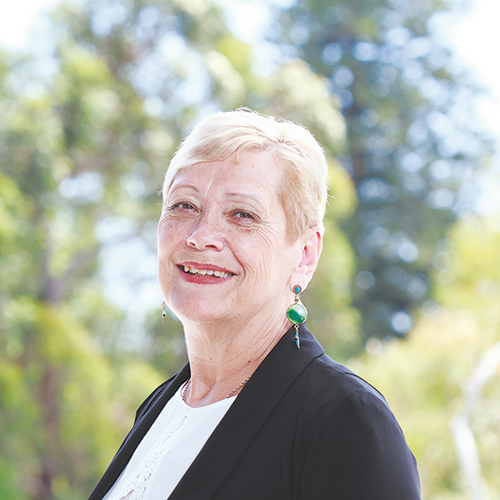
Local Government Minister Tony Simpson is mistaken in his claim that the Local Government sector has provided implicit support for mandatory elected member training according to Western Australian Local Government Association (WALGA) President Councillor Lynne Cragie.

In December the WALGA’s State Council resolved to oppose mandatory training following input from all member Local Governments via its Zone and State Council governance process.

Cr Craigie said the Minister’s comments claiming the number of responses to a WALGA survey on the topic implied all those that didn’t contribute were in effect in support were mistaken.

“The Minister attributes support for a change to mandatory training to all Local Governments that didn’t openly oppose the idea, including those that didn’t respond to the survey.

“I would argue that the more reasonable and likely assumption would be that those Local Governments weren’t inclined to change the status quo and that means that the vast majority oppose mandatory training.”

Cr Craigie highlighted that the WALGA State Council didn’t just rely on the survey to determine its policy position.

“We tested the survey results by presenting the findings to a full round of Zone meetings across the state. These meetings involve delegates from all member Local Governments, regardless of whether or not they participated in the survey.

“If the Minister’s proposition was correct, the survey findings would have been voted down and amended. On the contrary, they were overwhelmingly endorsed which makes me all the more confident that our adopted policy position reflects the true view of the sector.”

In explaining the sector’s position on compulsory training, Cr Craigie emphasised that it wasn’t a new issue.

“WALGA identified the importance of elected member training in enhancing the professionalism of councils nearly 10 years ago. Our Systemic Sustainability Study championed the need to invest in more training for elected members.

“We stopped short of endorsing compulsory training in the belief that it was undemocratic to place educational prerequisites on a person’s right to represent their community unless that was to be the standard for all spheres of government.  Furthermore, there is the risk you could discourage individuals from standing for election at a time when we’re trying to increase diversity on councils.

“The truth is that whilst you can mandate training, you can’t mandate learning. Simplistic tactics like mandating processes don’t address underlying issues and can ultimately cause more problems than they solve.”

Cr Craigie noted state and federal elected representatives weren’t subject to similar requirements, suggesting it was an inequitable approach.

“If we are going to have that conversation, it needs to be considered across the full political spectrum and not just in relation to local government.”

Digital Editions


  • Jack Iori honored by the Hills.

    Jack Iori honored by the Hills.

    The Hills Shire Council has officially named the grandstand at Kellyville Memorial Park Community Centre the Jack Iori Grandstand, recognising the enormous impact Jack Iori…

More News

  • Unwavering support and thanks in Bondi aftermath

    Unwavering support and thanks in Bondi aftermath

    Councils across NSW are being encouraged to continue to provide direct support for the Waverley community in the wake of December’s devastating terrorist attack at Bondi while Waverley has paid…

  • Redlands Koala population stable

    Redlands Koala population stable

    Redland City Council has become the first local government in south-east Queensland – and within the koala’s federally-listed northern endangered range – to report stabilisation of its city-wide koala population.…

  • Looking for “Red Fleet” Solutions

    Looking for “Red Fleet” Solutions

    The Country Mayors Association of NSW (CMA) has met with NSW Emergency Services Minister the Hon Jihad Dib MP about the Red Fleet issue, which refers to local Councils currently…

  • Three small changes making big differences in grand programs

    Three small changes making big differences in grand programs

    Local government grant programs are designed to create community impact. Yet for many councils, the effectiveness of those programs is shaped less by intent and more by the processes that…

  • Alice skating program a success

    Alice skating program a success

    Free ice skating, packed programs and smiling faces have marked the end of a hugely successful school holiday program delivered through a partnership between Alice Springs Town Council, the Northern…

  • Supporting Waverley

    Supporting Waverley

    Councils across NSW are being encouraged to continue to provide direct support for the Waverley community in the wake of December’s devastating terrorist attack at Bondi. In the aftermath of…

  • New deputy for Liverpool

    New deputy for Liverpool

    Councillor Peter Harle has been elected Deputy Mayor of Liverpool City Council following the resignation of Cllr Dr Betty Green. Councillor Harle, who has served the office in the past,…

  • Erosion reef wins awards

    Erosion reef wins awards

    A West Australian-first coastal erosion research reef installed off C.Y. O’Connor Beach in 2022, reducing wave height and energy and blossoming into a thriving habitat, took out the 2025 WA…

  • More rehabilitation works for Coffs

    More rehabilitation works for Coffs

    Scores of local flood-damaged roads will be improved after the City of Coffs Harbour determined to expand rehabilitation works. An initial program of stabilisation works had already been approved for…

  • First-class Pump Track opens in Ballina

    First-class Pump Track opens in Ballina

    Ballina Shire Council is thrilled to announce the completion of the new Ballina Pump Track at Kingsford Smith Reserve in the heart of Ballina. Designed to national competition standards, the…