Last month, the federal Minister for Resources, Senator Mat Canavan, released the first National Resources Statement for two decades. There’s a fair bit of motherhood in it.
Indeed I’m reminded when a certain PM asked a group of mining barons a few years back: ‘What can the Government do for you?’ The reply came back quickly: ‘Two things Prime Minister. First get your hand out of my pocket. And second, get out of my way.’
Things have improved since then, and I couldn’t imagine Twiggy Forrest being so crass.
Nevertheless there are numerous sentiments in the Statement that will go through to the keeper. For example, ‘collaborating with industry to better compete in global markets by promoting our world-class strengths through a national resources brand which highlights our strengths…da de da.’ The barons would be chortling.
But councils in the mining regions should note some of the aims e.g.:
- Work with industry, state and territory governments and local communities to promote priority new greenfield basins and provinces. We will seek to align policies, provide information and investment services, and develop a shared vision for infrastructure.
- Work cooperatively with the Northern Territory to bring forward the development of the Beetaloo Sub-basin as a potentially world class new gas province and to assist in maximising the downstream value of the petroleum industry.
- Develop a national strategy through the COAG Energy Council to harness the emerging opportunities to develop and grow downstream industries.
- Ensure the development of ‘new critical minerals’ is one of the most important considerations of the Roads of Strategic Importance program and the Northern Australia Infrastructure Facility.
- Trial regional deals for Australia, initially focusing on the Barkly region.
Assisting our neighbours
When touring through Thailand, Vietnam, Fiji or wherever, it’s intriguing to see the rudimentary farming practices in play – manual seed-planting, rudimentary processing techniques, old machinery, scary OH&S practices etc.
Helping these farmers upgrade their farming and processing technologies is a noble cause, and Australia does as much as any nation in this regard.
But I was recently reminded of the very interesting work of John Collins, an agritourism expert based in Leeton NSW.
John is an experienced communicator and networker across the agricultural industry in the Riverina.
He established Agricultural Tours Riverina (ATR) some years back to provide a mechanism to connect buyers, sellers, researchers and just the curious about food and fibre production in the Riverina, especially innovative and specialised technological and agronomical techniques, and economic and social opportunities on offer.
John explained that he hosts mostly small groups from Uruguay, China, Vietnam, India etc. around Riverina properties and research facilities.
I asked him if he sees the results of his work in terms of investment, technology or trade deals, and he basically replied: ‘No, but I do hear about good outcomes from time to time.’
And isn’t that the reality – such work must surely be worth something, but the early groundwork gets forgotten down the track.
Power to businesses like ATR.
We have 49 Austrade posts plus agricultural counsellors and immigration officials around the world fielding enquiries about how to establish businesses or find technology partners in Australia. Why not get them to pass the enquiries directly onto ATR and similar outfits? In other words, get the people face-to-face and take things from there.
I aim to float this idea with Austrade. If you know of other like businesses, please advise. John’s contacts are 0419 407 804 or riverineagtours@gmail.com
Social capital in regional communities
In last month’s column we featured the importance of Aussie Rules to many regional communities, and there has been a groundswell of support.
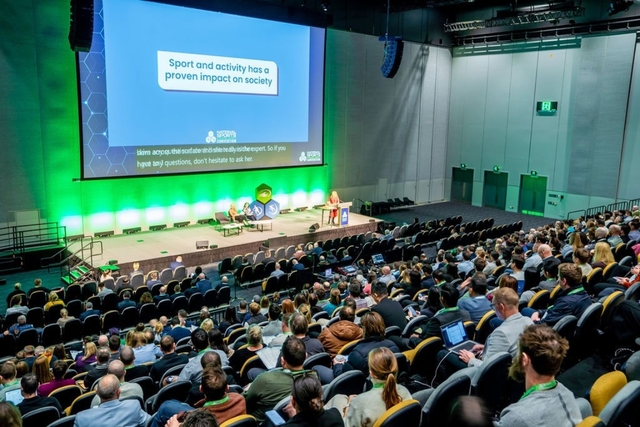
Indeed one reader shared some interesting research results from the Centre for Sport & Social Impact (Latrobe University), specifically that for every $1 spent by an average community football club in Victoria there is least $4.40 of social value generated in terms of:
- increased social connectedness, wellbeing, and mental health status
- employment outcomes
- personal development
- physical health
- civic pride and support of other community groups.
The research report goes on to argue that football clubs are three times more useful for developing social networks than work, education or other community groups.
It also claims that players, supporters etc., especially those aged 15-24, enjoy significantly increased chances of securing employment via the social networks provided by the club.
The same age bracket reportedly enjoys higher levels of physical/mental health compared with a sample of the Victorian population.
I’m not sure how the researchers work out their social return values, but the results do seem possible, and would presumably apply nationally and to other sports clubs.
The bottom line is that the clubs and local councils should be seeking support from state governments. They are closer to the game than the feds.
Rod Brown is a Canberra-based consultant and lobbyist specialising in industry/regional development, investment attraction and clusters, and accessing federal grants. He also runs the Cockatoo Network.
Phone: (02) 6231 7261 or 0412 922 559
Email: apdcockatoo[@]iprimus.com.au