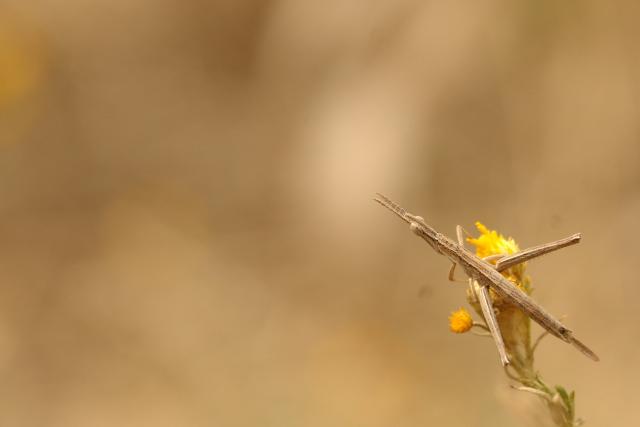
Hundreds of tiny, flightless grasshoppers will be released into Melbourne’s Royal Park as part of a pilot project addressing the biodiversity emergency.
The City of Melbourne partnered with the University of Melbourne to restore the local population of Matchstick Grasshoppers – a declining native Australian species that is currently locally extinct in the municipality.
According to Lord Mayor Sally Capp, researchers have collected more than 3000 Matchstick Grasshoppers from across Victoria, which will be reintroduced to suitable new habitats in Melbourne, including Royal Park in Parkville, Burnley and the Bayside area.
“Protecting and enhancing locally endangered creatures in our ecosystem could not be more important, so we’re proud to be working with the University of Melbourne to reintroduce Matchstick Grasshoppers to our wonderful city,” Lord Mayor Capp said.
“We’re calling on Melburnians to look out for these tiny creepy crawlies and become a citizen scientist, to help us gather information to protect and restore their population.
“Insects are the unsung heroes of our ecosystem, playing a vital role in sustaining humanity by pollinating plants, turning over soil and providing food for creatures higher up the food chain,” environment portfolio lead Councillor Rohan Leppert said.
“It’s fantastic to be welcoming the humble Matchstick Grasshopper back into our environment. We hope to see them flourish, and eventually, restore more species of invertebrates across our city parks, gardens and backyards.”
The population will be monitored and assessed over the coming months, with grasshopper numbers hoped to jump into the thousands by 2023.
The experimental translocation is council’s first-ever attempt at reintroducing a locally extinct species, and an important milestone in its Nature in the City Strategy, which aims to support a diverse and resilient natural environment.
Insects like grasshoppers play an important role in maintaining a healthy ecosystem and are an abundant food source for larger animals such as praying mantis, lizards and birds.
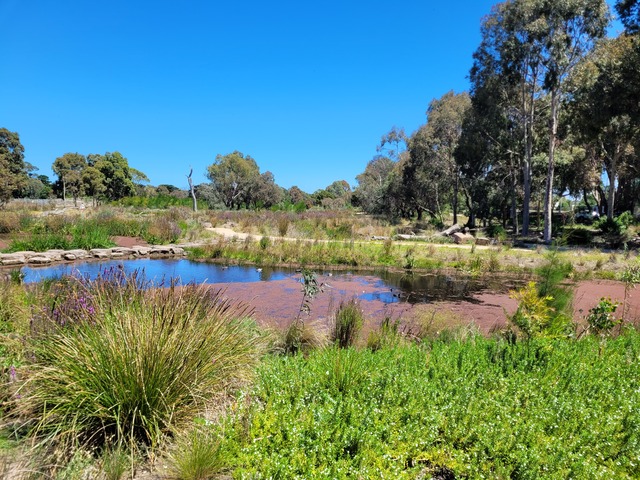
The tiny, wingless critters thrive in habitats of everlasting daisies, native grasses and ample sunlight, and in environments that are free from weeds and predators.
The Matchstick Grasshopper’s population has dwindled in recent years due to a scarcity of suitable environments and an inability to relocate from one habitat to the next.
The project brings together researchers, scientists, community groups and land managers to support biodiversity.
It provides an opportunity to foster local food webs, and has ecological benefits, as well as education and community participation opportunities such as site management and species monitoring.
The collaborative approach facilitates longer-term testing and adaptive management through experimental plots designed as public amenity with aesthetics and park function in mind.
The grasshoppers are being released into habitat sites created through community planting days.
The Matchstick Grasshopper Renaturing project is led by The University of Melbourne and supported by the City of Melbourne.