In the past three decades, the lifestyle advantages of coastal economies have underpinned their regional economic development.
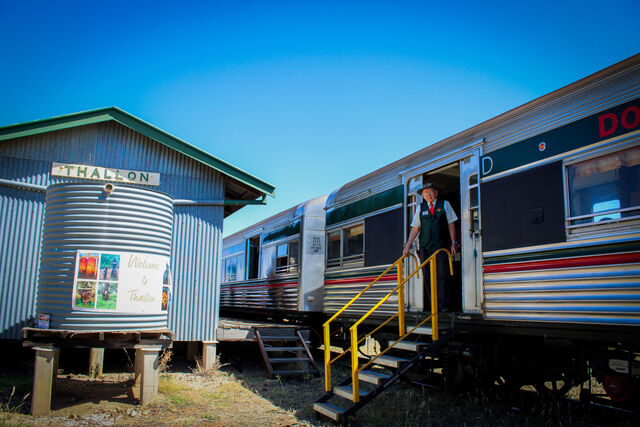
But inland communities without that lifestyle advantage have had to work hard. Indeed, places like Mildura, Griffith and Toowoomba have succeeded via food value-adding, agricultural services and tourism.
But these are large-ish places, and they’ve benefited from agglomeration effects.
The sad part are the losers of the agglomeration effect. The Federal Treasury mantra is that declining communities are part of the economic process, and that the Federal Government shouldn’t be involved in saving them. Treasury also argues that the feds should vacate this space. This view is, of course, ridiculous.
Nevertheless, the feds take a relatively benign approach to regional development. Sure, there are agriculture and industry programs of regional relevance, but there is no overall federal-state policy framework to facilitate the ongoing viability and functioning of rural communities. They are basically consigned to the “too hard“ basket.
In this context, I would respectfully suggest that governments, including local government, think about “stranded“ assets. In economic jargon, a stranded asset has suffered from unanticipated or premature write-downs or devaluation. The causes may be technical or environmental factors, changes in transport systems, shifts in consumer tastes etc.
The appropriate regional policy response, especially if government policies have contributed to the problem, would be to systematically investigate how to rebuild local economies, and to also assist those stranded assets where feasible.
Local councils do their best to get support from government programs and to attract investors. But the system is basically reactive and piecemeal, and thus invariably fragmented.
On the other hand, a proactive system would involve a SWOT analysis (strengths, weaknesses, opportunities, and threats), especially the identification of stranded assets and gaps in hard and soft infrastructure. Action agendas would then follow. This is not rocket science. In NSW it could involve the widening of its special activation precinct program.
Examples of stranded assets are in Orbost and Bombala. These former timber towns have shrunk due to the government-driven cutbacks in timber logging. Timber mills, pubs, shops and clubs are stranded to varying degrees. No way back for the timber mills, but high-value furniture and flooring manufactured from sustainable timber reserves could be an action agenda.
And in the Murray-Darling Basin, there are a swath of communities that have suffered major damage from water buy-back programs. For example, the Moulamein economy (near Swan Hill) has been likened to Swiss cheese whereby farms have effectively disappeared, reducing regional economic activity and population. And now flood recovery is the big issue. Action agendas for levy bank reconstruction and new, value-adding agriculture would seem appropriate.
The sad part in these examples are often the vacant shops in these communities. There are numerous stories of farmers selling out, and buying shops and pubs in local towns as their superannuation nest eggs – only to see them become virtually worthless.
Role of RDA Committees?
There are reportedly 52 of these around the nation. They don’t get much coverage outside their local area, but they are untapped resource. I’ve had recently had dealings with some of them, and the skills and experience of the RDA committee members is quite incredible. I’m not privy to their inner workings, but I’d bet London to a brick that they would feel under-utilised and not appreciated.
I therefore pose the question – could the RDA Committees, jointly with local councils, play a role in identifying rural towns and villages that would benefit from an economic snapshot as described above? These snapshots arguably shouldn’t extend to social matters – leave that to others, otherwise you would sink without trace.
Again, the NSW special activation precincts are the broad model. The economic snapshots for a community needn’t be a huge expensive. Their value would lie in providing:
* Guidance to the three tiers of government on how their policies and programs might be coordinated in order to actually improve a community’s overall functioning.
* Objective advice to private sector investors. There is a dearth of decent regional and up-to-date data in this field.
* A semblance of hope to regional folk that governments are at least trying to understanding their economic circumstances, and not leaving their future to the invisible hand of the market.
One final thought. The Federal Government is priding itself of being proactive and relevant. Prime Miniter Anthony Albanese was previously the minister responsible for regional development, hence he would appreciate the fragmented, uncoordinated effort of the Federal Government regional arts programs this year, next year regional health programs, the following year a smattering of environmental or sports programs. Could councillors please ponder the possibility, when it might arise, of Albo or his ministers engaging with their state counterparts in devising a brave new world?
Bonza Airlines
On the subject of regional development, Bonza is a potentially important new player. It has entered our domestic aviation industry from a base on the Sunshine Coast. It describes itself as Australia’s only independent low-cost carrier, and plans to predominantly serve under-utilised domestic and regional routes. However, there are no signs yet of involvement in Western Australia and South Australia, where air travel is so important.
The airline is majority owned by 777 Partners, a private investment firm based in Miami USA. This is instructive and we should all hope that Bonza succeeds – otherwise the Miami bean-counters might take a short-term view on things.
Meanwhile our other regional airline, Rex, continues to make inroads into the market share of the Qantas-Virgin duopoly. Qantas’ nose-diving consumer brand has undoubtedly helped. The latest is a video of baggage being hurled on to the aircraft conveyor. This has been going on for years, and I’m chuffed that the passenger had the presence of mind to blow this apart.