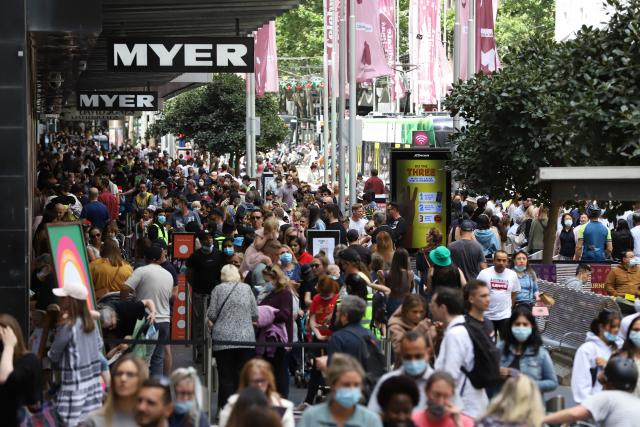
The opening of Australia’s borders in early 2022 led to a much stronger than anticipated recovery in population growth according to the National Housing Finance and Investment Corporation’s (NHFIC) third flagship ‘State of the Nation’s Housing 2022-23’ research report.
NHIF CEO Nathan Dal Bon said the report provides data and analysis into housing demand and supply across Australia, as well as long-term projections, with a view to identifying potential drivers of, and challenges to, housing affordability.
“The rapid return of overseas migration together with a supply pipeline constrained by decade-high construction costs and significant increases in interest rates is exacerbating an already tight rental market,” he said.
NHFIC analysis shows housing affordability and supply are likely to remain challenging for some time, underscoring the need for a holistic approach to mitigate the housing pressures Australians are facing.”
The Centre for Population expects net overseas migration to increase by 268,000 between 2022 and 2024, with recent data suggesting this could be considerably higher.
The rapid return of population growth is coinciding with the fastest increases in interest rates for several decades, undermining residential construction feasibilities and weakening the pipeline of new housing. NHFIC modelling in the State of the Nation’s Housing 2022-23 suggests:
• More than 1.8 million new households are expected to form across Australia from 2023 to 2033, taking total households to 12.6 million (up from 10.7 million in 2022). These households are expected to comprise around 1.7 million new occupied households and 116,000 vacant properties (eg holiday homes).
• The much earlier increase in interest rates (relative to previous Reserve Bank of Australia guidance) is adversely impacting supply. NHFIC expects around 148,500 new dwellings (net of demolitions) to be delivered in 2022-23, before net new construction falls to 127,500 in 2024-25. A recovery in supply is expected after 2025-26 on the back of changing macroeconomic conditions and stronger underlying demand.
• Slowing supply, together with increasing household formation is expected to lead to a supply household formation balance of around -106,300 dwellings (cumulative) over the five years to 2027 (and around -79,300 dwellings over the projection period 2023 to 2033).
• From 2023 to 2032, household formation is expected to be dominated by lone person households (563,600 additional households), followed by couples with children households (533,300 additional households). Within five years, it is expected lone person households will be the fastest growing household type across the country.
• NHFIC continues to expect a shortage of apartments and multi-density dwellings for rent over the medium-term. Net additions of apartments and medium-density dwellings such as town houses are projected to be around 57,000 a year (on average) over the five years to 2026-27, around 40 per cent less than the levels seen in the late 2010s.
• The premium for space at home, with ongoing work from home arrangements following the pandemic has contributed to reducing average household size. This has been a factor in sharply falling vacancy rates. Analysis shows that decreasing household size since mid-2021 led to an additional 341,500 households forming, or around 103,000 in net terms since the beginning of COVID-19.
• NHFIC estimates that, conservatively, around 377,600 households are in housing need, comprising 331,000 households in rental stress and 46,500 households experiencing homelessness. Housing need across the country range from 208,200 households in highly acute rental stress to 577,400 households under less acute rental pressure. Key findings of NHFIC’s State of the Nation’s Housing 2022-23:
• Strong demand for housing coupled with tight supply of both labour and materials, and bad weather has put significant pressure on the construction industry. Approximately 28,000 dwellings were delayed in 2022. NHFIC’s industry consultation suggests builders are making cost allowances of up to 40 per cent for unexpected delays, up from a more normal 20 per cent.
• In addition to higher interest rates, supply of new housing continues to be impeded by a range of factors including, the availability of serviced land, higher construction costs, ongoing community opposition to development and long lead times for delivering new supply.
• Rental growth and rental affordability varied significantly across and within greater city and regional areas, with rental growth in regional areas now falling after a period of record demand. Rental growth in major cities such as Sydney and Melbourne are outpacing rental growth in regional NSW and Vic, which suggests the premium of living in large cities close to employment centres may be returning.
• Rental affordability has varied greatly across the country during COVID-19. In Sydney, rents in several outer Local Government Areas (LGAs) increased more than 30 per cent from early-2020 to January 2023 and more than three times that of some innercity LGAs. Outcomes in Melbourne have been more subdued, with more than half of Melbourne’s LGAs experiencing rental increases of less than 10 per cent since prepandemic. Southeast Qld has had the largest rental rises, with all 12 LGAs experiencing rental increases of 30 per cent or more.
• Trends in the macroeconomy can affect the ability of first home buyers to enter the market. Analysis shows that since the 1990s in Sydney, deposit hurdle rates (ie deposit as a percentage of income) on average increased by around eight per cent during an interest rate tightening cycle (-10 so far this cycle), compared with 26 per cent during easing cycles. The average deposit required as a percentage of annual income has nearly doubled over this period from 60 per cent to 110 per cent.