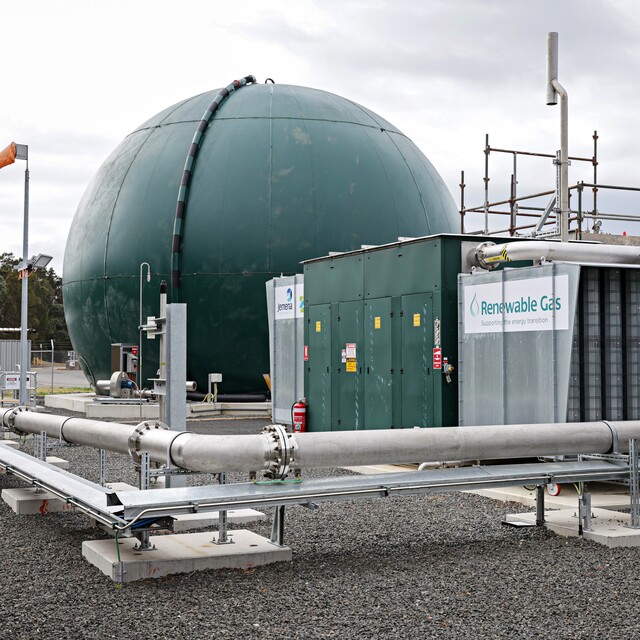
Australia’s first biomethane-to-gas-network injection plant was formally certified in March by GreenPower in an important next step for Australia’s nascent renewable gas sector.
Renewable Gas certification means renewable gas certificates can be issued for gas produced at the Malabar Biomethane Injection Plant (MBIP), owned and operated by Jemena, certifying that gas produced at the plant is low-emission renewable gas.
And now three new biomethane production facilities are a step closer to being developed in regional areas of New South Wales, after energy infrastructure company Jemena and renewable gas producer Optimal Energy recently signed a three year Memorandum of Understanding (MoU).
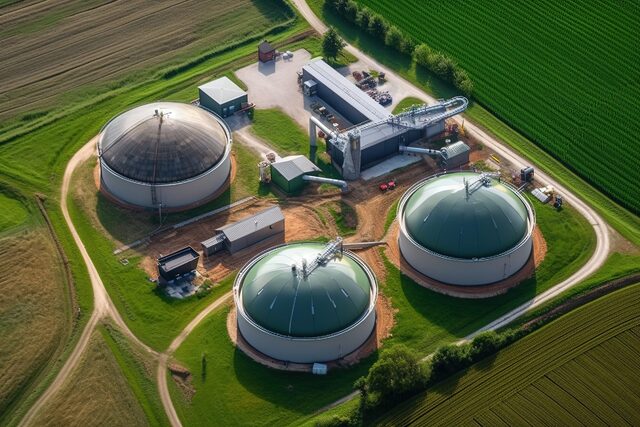
Through the arrangement, Optimal Renewable Gas (ORG) will identify suitable sites in regional New South Wales in proximity to agricultural and other waste sources (which are a key feedstock for the production of biomethane) that could produce up to 1.5 petajoules of biomethane, in preparation for building the facilities. Additionally, Jemena will undertake feasibility and preparatory work so biomethane can be injected into the nearby NSW gas distribution network.
Biomethane is a renewable gas created by processing biogas, which is generated from decomposing organic waste. It is completely interchangeable with natural gas and is, therefore, compatible with all existing gas network infrastructure, gas appliances used in homes and businesses today, and in industrial manufacturing processes.
Internationally, biomethane production is also demonstrating the benefits of a circular economy – where organic waste is diverted from landfill, reducing fugitive emissions and providing renewable energy which can be used to complement other renewables such as wind and solar, and displace natural gas in networks.
Managing Director of Optimal Renewable Gas, Mike Davis, said: “Work has begun to start assessing projects in NSW to produce biomethane to inject into the gas network. Based on our work to date, we could potentially be looking at somewhere closer to 2-4 petajoules per annum. Our near-term aim is to have ten grid-scale plants in production or under development nationally by 2030.”
“This is a no-brainer for regional NSW, establishing a circular economy to optimise the management of organic waste, accelerating the energy transition, improving regional energy security, and decarbonising difficult-to-electrify gas demand whilst returning nutrients back to agriculture.”
Jemena’s Managing Director, David Gillespie, said: “We’re pleased to bring to the table our long- standing energy infrastructure expertise, together with the experience we’ve developed through the Australian-first Malabar Biomethane Injection Plant which – since earlier last year – has been producing biomethane from wastewater and injecting it into the NSW gas distribution network.”
“It’s our view that biomethane offers a here-and-now way to help reduce emissions. Transitioning the energy system so it meets Australia’s net-zero emission targets is a massive undertaking, and we need to be looking at all available options. Continuing to use Australia’s extensive, existing gas networks to transport increasing volumes of renewable gases like biomethane can complement renewable electricity, both in firming the network, and in continuing to power many businesses and manufacturing sectors, as well as heat homes and hot water systems.”
The potential for biomethane and other bioenergy sources to become part of Australia’s future energy system has been outlined in the Australian Renewable Energy Agency’s (ARENA) 2021 Bioenergy Roadmap. It projects that by the start of the next decade, Australia’s bioenergy sector could contribute around $10 billion in extra GDP per annum, create over 26,000 new jobs, reduce Australia’s emissions by about 9 per cent, divert an extra 6 per cent of waste from landfill, and enhance fuel security.
Research commissioned by Jemena has identified potential sources of biomethane – agricultural waste, waste water and landfills – in the vicinity of its NSW network that could produce up to 30 petajoules of biomethane annually. To put this in context, Jemena’s 386 industrial costumers used around 49.6 petajoules of gas last year.
The potential for a renewable gas industry, to bring circular economy benefits and job opportunities to regional areas, is immense.