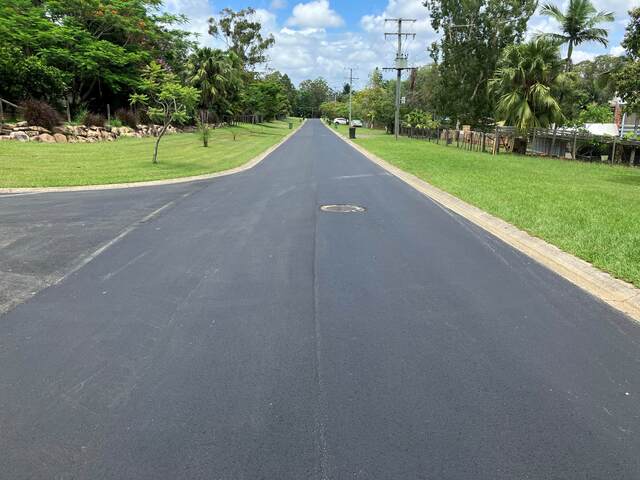
Victoria’s 79 local councils manage over $73 billion in physical assets. These buildings, parks and gardens, roads, bridges and drainage networks need to be maintained so that councils can continue to provide services and support community activities.
The Victorian Auditor-General’s report tabled on February 19, Asset Management and Maintenance by Councils, highlights issues with councils’ asset renewal planning and practices, and with their asset management policies, plans, strategies and information systems.
The biggest issue is the growing asset ‘renewal gap’, which is the difference between the funding that councils need to renew their assets, and the money they actually allocate to this purpose.
The renewal gap for Victorian councils is estimated to be $225.3 million in 2012–13 with the cumulative asset renewal gap predicted to grow to almost $2.3 billion by 2026–27.
If the renewal gap is not effectively managed it could lead to reduced services, poorer quality of community life, lower economic activity, the accelerated deterioration of assets and the possibility of having to spend more on maintenance and renewal in the long run.
There are also potential safety risks to the public if assets deteriorate to the point of failure.
The Victorian Auditor-General, John Doyle noted that ‘a number of previous reports from my office have identified persistent issues with council asset management practices and recommended that councils improve their asset management frameworks and their related policies, strategies and plans’.
Bill McArthur, president of the Municipal Association of Victoria (MAV) said that the MAV broadly supports the Auditor-General’s findings and is working to close the renewal gap.
McArthur said that the Auditor General correctly identified the challenge of the renewal gap that is currently facing councils, however these can be reduced over time with proper management of council assets and the avoidance passing on massive expense to the ratepayer.
National Asset Management Assessment Framework (NAMAF) was set up in 2002 to face such challenges, and with successful implementation, McArthur “is confident that councils can avoid the 2.3 billion figure predicted for 2026”.
Councils have improved in some of these areas in recent years, however the report found that significant deficiencies remain in areas such as asset renewal planning and practice, the quality of asset management plans, linking of service levels to these plans, the development of asset management information systems, and in monitoring, evaluation and reporting on asset management.
Debt Management key for Council’s future
Significant research on local government finance from the Australian Centre of Excellence for Local Government (ACELG) suggests that the closely managed use of debt by local councils would address infrastructure backlogs and positively support sustainable local communities and organisation performance.
This finding and others can be found in Debt is Not a Dirty Word: The Role and Use of Debt in Local Government, prepared by John Comrie for ACELG at UTS, and supported by consortium partner, the Institute of Public Works Engineering Australasia (IPWEA).
The aim of the project has been to support the Australian local government sector to contend with the increasingly complex financial arrangements and considerations required to viably operate a contemporary local council now and into the future.
The research builds upon the landmark ACELG paper, In Our Hands, Strengthening Local Government Revenue for the 21st Century.
“Something has to shift, it’s simply not possible for many councils to make significant improvements in their financial, asset management and service delivery performance without a change in approach,” said ACELG Director Associate Professor Roberta Ryan.
“This paper suggests a way forward, and ACELG and its consortium partners will be engaging with the sector about its findings and seeking a view from all on this crucial topic.”
Key chapters include financial fundamentals; review of local government debt and financial performance; local government debt management theory, and; local government debt management practices.
Chris Champion, IPWEA Chief Executive, welcomed the report.
“IPWEA has worked closely with the author in developing the paper as our members are keenly aware of the factors that can impact upon well-developed and financially sustainable strategic, asset management and long-term financial plans.”
A reference group that included senior representatives from all local government jurisdictions oversaw the research.
ACELG will continue this consultative approach in gaining feedback about the research findings, and a series of workshops and presentations are planned.