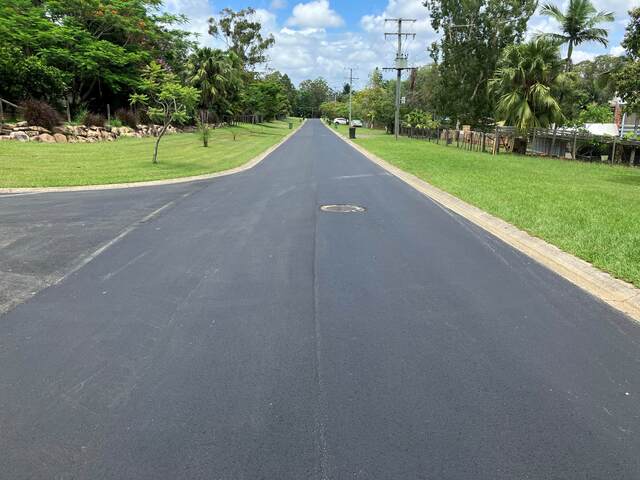
Councils are screaming Blue Murder about the Albanese Government’s decision to cancel funding for 82 infrastructure projects as a result of an independent review.
But the review’s findings make sense once the problem is fully appreciated – which is that the infrastructure pipeline is seriously clogged. Why is this?
Demand side
On the demand side, a succession of federal and state governments have played politics with infrastructure projects. They’ve happily referred hundreds and hundreds of projects onto Infrastructure Australia without much due diligence. Governments have been happy to glad-hand project proponents. As a result, Infrastructure Australia basically became a post office box where projects simply sat there.
The problem has been exacerbated by politicians getting involved in vanity projects viz. car parks for urban rail stations, football stadiums. The Inland Rail and Snowy 2.0 projects are close to being in this category.
Supply side
Construction costs have ballooned due to supply chain issues with materials, together with the bidding up of wages in a tight labour market. In my former life I was Assistant Secretary Building & Construction, and later for Regional Infrastructure with the feds – so I’ve been quietly tracking this issue for some time. My current estimation is that construction costs are 25-30 per cent higher than the long-term trend.
Another problem on the supply side are federal budgetary constraints (associated with the stalling of taxation reform) as well as some states (Victoria being the standout). And lastly there is tendency for project proponents, and state/local government to see the feds as the funder of last resort.
All of the above factors explain why the feds had to take the heat out of the infrastructure market, and to knock some heads together.
Which brings me to the cancelled project grabbing the headlines in Sydney, namely the Western Sydney interchange connecting the M7 to Sydney’s second airport. I’m not privy to the exact reasons for the decision, but it clearly highlights the need for some head knocking. The bottom line is that Sydney’s transport system is on life support, and decent access to and from the new airport is critical to addressing the issue.
Other recommendations
The independent review made two other recommendations of particular relevance to local councils.
First, it has recommended that states and territories, in consultation with local governments, provide the Commonwealth with an annual infrastructure plan. This will include priority projects that have, or are seeking, a federal funding contribution over the next ten years and how they will be sequenced.
This annual infrastructure plan will include how the jurisdiction will manage cost pressures e.g. population growth, carbon emissions, regional development, housing. I strongly suggest that councils take this seriously, because if they don’t then projects will not be considered for funding. Indeed if you think about it, councils are best-placed to provide the specific arguments and data to underpin funding submissions.
Secondly, the independent review recommended a 50-50 split between the feds and state/local government. This is surely designed to stop the feds’ funder of last resort problem, and to inject some collaborative spirit into the process. Significantly, the feds will retain the flexibility to apply a different split for remote area projects.
Pokies reform
The pokies reform agenda has lost its oomph. And I figure that local councils have a role in getting it back on track.
To explain, a year ago, Rev Tim Costello (ex-Mayor of St Kilda) and Andrew Wilkie (federal independent) were hitting the airwaves on this, but now things have gone quiet. This is understandable given that licensed clubs and the Australian Hotels Association are formidable lobbyists with strong PR teams, and they haven’t been sitting on their hands.
Meanwhile the social costs keep adding up. Billions of dollars are being sucked out of local communities, and untold damage is being wrought on gambling addicts and their families. A case in point is in South Australia where a significant proportion of female jail inmates are reportedly there because of thefts to finance their pokies addiction.
The latest spark has come from Frank Carbone, Mayor of Fairfield City Council (western Sydney, heart of pokies land), who is proposing that clubs making more than $20 million profit would be levied with a 10 per cent tax on their gaming revenue, with the proceeds being spent on reviving the night-time economy within the same LGA, along with sporting infrastructure.
Now Frank’s suggestion is a sensible one, and it serves as a platform for further development.
For example, Canberra has numerous community and sports clubs with pokies, and their profits are basically returned to the local community. Each club has criteria to determine where the profits are to be allocated – to social welfare groups, church groups, choral societies, sports and health facilities etc. The ACT government has no role.
The unappreciated point here is that the clubs’ disbursements take pressure off the ACT Government’s budget expenditure to manage the damage caused by the gambling epidemic. So in the case of western Sydney, the profits wouldn’t go to the NSW Government’s consolidated revenue, but straight back to the western Sydney community. The same logic can apply to country towns. Many LGAs in the bush are doing it tough, so why shouldn’t their clubs be able to reinvest any profits to their local communities?
Meanwhile there is the issue that federal and state governments don’t want to talk about – private ownership of poker machines. Why should hotels and Woolworths and Coles be allowed to profit from pokies? This is a disgraceful situation and the boofhead politicians that allowed this to happen should be ashamed. There are no economic or social arguments to support this.
I’d like to hear from local councils with an interest in collaborating to push the pokies issue further. And let’s learn from the Western Australia experience where there are no pokies, except at Burwood Casino.
The Albanese Government came into power with promises to reform things. Well let’s test this. Andrew Wilkie, the Teals and progressive councils could be effective in breaking the sad impact of pokies on our communities.
Chalmers looking good
Treasurer Jim Chalmers is Albanese’s logical successor as Labor leader when the time comes. He has a great grasp of eco-political reality, a pleasant manner and is media savvy. Tania Plibersek and Tony Burke are in the frame too.
In terms of the Liberals, my sources say that sections of the Victorian Branch are now laying the groundwork for a Josh Frydenberg comeback. He has to either regain his seat of Kooyong, or find a safer one. Frydenberg has a similar skillset to Chalmers, and would be a strong contender for Liberal leader when the Dutton experiment loses momentum.
Rod Brown is a Canberra-based lobbyist specialising in industry/regional development. Email apdcockatoo@iprimus.com.au